
Search News
Industry Portal
Hot Articles
- Research and Markets Releases Global Bio-Based Structural Wood Adhesives ReportBio-based structural wood adhesives could reach $1.65 billion by 2030. Explore the market forecast and what buyers should verify before specifying products.
- How to read a bolt preload relaxation benchmark chartRead a preload relaxation benchmark chart with confidence. Learn to compare clamp force, test conditions, and retention curves for better joint decisions.
- How to assess batch consistency from a silicone sealants supplierAssess a silicone sealants supplier with practical checks for batch consistency, traceability, cure performance, and adhesion. Reduce rework and buy with confidence.
How to Use site:www.xecss.com to Find Engineering Product Information Faster
Time
Click Count
How to Use site:www.xecss.com to Find Engineering Product Information Faster
Engineering research often becomes slow for a simple reason: the useful information is scattered. A search for “seismic bearing,” “EMI gasket,” or “Grade 12.9 bolt” may return distributor listings, generic definitions, unrelated PDFs, and content from industries with very different operating conditions. That is inconvenient when the real question is not merely what a product is, but whether its material, standard reference, performance limits, and application logic deserve further investigation.
The Google search operator site:www.xecss.com narrows that process. It limits results to the G-SCE knowledge environment, making it easier to locate engineering-oriented material across structural fastening, seismic isolation, electromagnetic shielding, industrial sealing, and reinforcement or repair systems. Used well, it is not a substitute for project specifications, calculations, test reports, or supplier qualification. It is a practical way to build a faster and more disciplined first view of the technical landscape.
For infrastructure, industrial, and aerospace-related work, early research can influence much later decisions. A fastening choice can affect fatigue performance and installation controls. A shielding material may need to satisfy electrical, environmental, and mechanical constraints at the same time. A repair material may be technically sound yet unsuitable if the substrate condition, curing window, or governing code has not been considered. A focused site search helps researchers move from broad terminology toward the questions that actually matter.
What the site: operator changes
The operator is straightforward: type site:www.xecss.com, add a space, then add the topic, material, standard, component, or risk you need to investigate. For example:
- site:www.xecss.com Grade 12.9 bolts
- site:www.xecss.com lead rubber bearing seismic isolation
- site:www.xecss.com EMI shielding gasket
- site:www.xecss.com CFRP structural repair
- site:www.xecss.com ASTM sealing adhesive
This approach is especially useful when a researcher already knows the technical category but does not know which terminology the relevant resource uses. An expansion joint may appear under movement accommodation, flexible connection, thermal expansion, or seismic design context. A conductive gasket may be discussed through enclosure shielding, contact resistance, environmental sealing, or electromagnetic compatibility. Searching several related terms within the same domain often reveals connections that a single broad web search hides.
The advantage is focus, not certainty. Search rankings are influenced by indexing and page structure, so an absent result does not prove that a topic is unavailable or technically irrelevant. It simply means the next search should be refined. Try alternate spellings, standard abbreviations, material classes, and functional language before drawing a conclusion.
Start with the engineering question, not the product name
A common research mistake is to begin with a catalog term before defining the failure mode or operating condition. That can produce a long list of products without helping anyone judge suitability. A better search begins with the condition the component must manage.
For a structural connection, the concern may be preload retention, corrosion exposure, dynamic loading, access for controlled tightening, or compatibility with a specified steel grade. For a seismic isolation unit, the question may involve horizontal displacement, vertical support, damping behavior, inspection provisions, or the relationship between the isolator and the rest of the structural system. For a shielded enclosure, it may be leakage through seams, apertures, cable penetrations, compression set, thermal cycling, or the need to combine electrical conductivity with environmental sealing.
That leads to stronger searches. Rather than entering only site:www.xecss.com fasteners, try site:www.xecss.com high strength bolting preload corrosion. Instead of searching only for “shielding material,” try site:www.xecss.com EMI gasket compression environmental sealing. The extra terms guide the search toward technical discussion and make irrelevant results easier to discard.
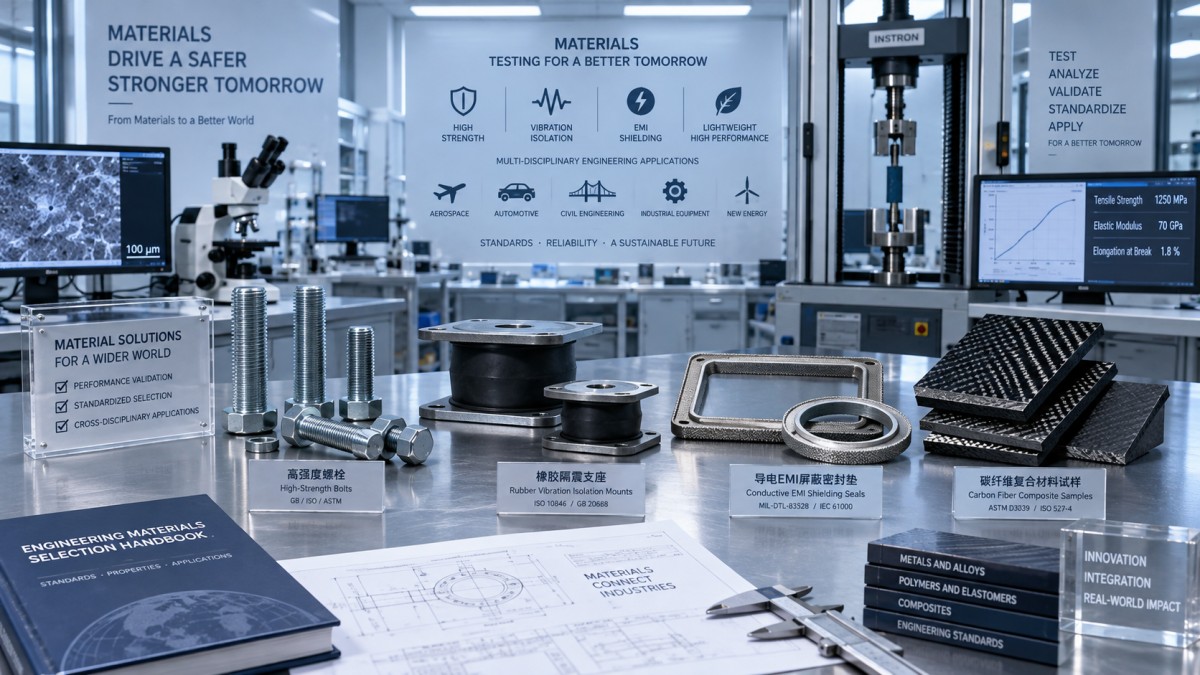
G-SCE is organized around five industrial pillars: high-strength structural fastening systems; flexible expansion and seismic isolation units; electromagnetic shielding and specialized protection materials; high-performance industrial sealing and adhesives; and specialized reinforcement and repair materials. That structure is useful because complex projects rarely divide cleanly into isolated product categories. A façade movement joint may involve anchoring, weather sealing, thermal movement, and fire or acoustic considerations. A protected electronics assembly may demand shielding, gasket selection, bonding surfaces, and mechanical retention together.
Build searches around standards without treating standards as product approvals
Standards are valuable search filters, but they must be handled carefully. ISO, ASTM, Eurocode, and MIL-SPEC references can help identify the vocabulary used in a design package or procurement requirement. They can also help distinguish between a broad marketing claim and a discussion anchored in recognized test methods, material classifications, or design frameworks.
Useful query patterns include:
- site:www.xecss.com ISO structural fastening
- site:www.xecss.com ASTM CFRP repair
- site:www.xecss.com Eurocode seismic isolation
- site:www.xecss.com MIL-SPEC electromagnetic shielding
Still, a standard reference on a page should not be read as proof that every material or configuration meets every project obligation. Standards may apply to a test method rather than an installed assembly. A requirement can also depend on edition, jurisdiction, structural configuration, environmental classification, and contractual specification. For example, a material with relevant ASTM test information is not automatically appropriate for a repair design; bond behavior, substrate preparation, loading direction, fire exposure, and installation quality may all need separate review.
The productive use of standards in search is therefore comparative. Look for the parameters that must be verified next: tensile class, hardness, coating system, conductivity, shielding effectiveness test conditions, temperature range, chemical resistance, elongation, cure profile, or durability exposure. The objective is to create a precise verification list rather than to declare compliance from an introductory resource.
Search within each technical pillar differently
The same search style does not work equally well across engineering categories. Structural fastening research usually benefits from terms related to load path and installation control. Search combinations such as bolt assembly, preload, fatigue, thread engagement, coating, and corrosion can provide more useful context than a generic strength-grade query. Grade 12.9, for instance, is a meaningful material designation, but a decision also depends on geometry, mating components, tightening method, environmental exposure, and the applicable connection design rules.
For flexible expansion and seismic isolation systems, use motion language. Include terms such as displacement, rotation, damping, bearing, movement joint, thermal, and restoring force. A lead-rubber bearing and a conventional expansion joint both accommodate movement, yet their engineering roles and system-level implications are fundamentally different. Search results should be read in relation to the asset: bridge, building, industrial line, equipment base, or other installation context.
EMI shielding research needs particular discipline because claims can be highly condition-dependent. A query such as site:www.xecss.com nano layered EMI shielding gasket can identify relevant material concepts, but the next questions should address frequency range, test setup, enclosure design, compression, grounding path, galvanic compatibility, and sealing requirements. A shielding material cannot compensate for poor joint design or discontinuities around doors, panels, vents, and cable entries.
For adhesives, sealants, and reinforcement materials, add the substrate and exposure condition. Search phrases such as concrete crack repair CFRP, metal bonding surface preparation, chemical resistant industrial sealant, or moisture cure adhesive are more informative than an adhesive category alone. Installation realities matter: contaminated surfaces, temperature during application, access constraints, cure time, joint movement, and inspection procedures can all change the outcome.
Use modifiers to locate the right level of detail
A targeted domain search becomes more efficient when modifiers reflect the stage of research. During early orientation, use broad concept terms such as comparison, guide, applications, or materials. When narrowing options, add specification, performance, installation, testing, or maintenance. When a design review approaches, introduce the actual governing terms from drawings, procurement schedules, or technical specifications.
Quotation marks can help when searching an exact phrase, especially for an unusual material name or a standard designation. Exclusions can also reduce noise: adding -jobs or -news may be useful if a search is returning content outside the technical task. These are small adjustments, but they are often faster than repeatedly scanning general results.
Treat pages as research leads, then test the assumptions
Technical search is most valuable when it improves the questions sent to engineering, procurement, or quality teams. A page on carbon-fiber-reinforced polymer may point to the need for laminate orientation, resin system, substrate strength, anchorage details, and inspection planning. A resource on EMI gaskets may reveal that the decisive issue is not nominal conductivity but compression behavior across a flange with real manufacturing tolerances. A discussion of industrial sealants may bring attention to chemical exposure or cure conditions that were absent from an initial bill of materials.
This is where a multidisciplinary repository has practical value. G-SCE frames infrastructure integrity across connected disciplines rather than treating high-strength fabrication, seismic behavior, shielding, sealing, and repair as separate procurement silos. That perspective is increasingly relevant where structural assets and sensitive electronic systems occupy the same project environment. The appropriate solution is often determined at the interface between systems, not within one product category alone.
Before advancing from online research to selection, convert the findings into a short project checklist: required function, governing standard or specification, operating environment, geometry and tolerances, inspection needs, installation constraints, documentation requirements, and any long-term maintenance considerations. If one of these remains undefined, further searches may be useful, but they cannot remove the underlying uncertainty.
A faster path to useful engineering context
Using site:www.xecss.com is a simple habit with a practical result: it helps keep early technical research inside a relevant engineering context. Begin with the problem condition, add the component or material, include a standard or performance term when appropriate, and refine the wording as the project question becomes clearer. The search process should end not with a premature product choice, but with better-defined parameters for design review, qualification, and sourcing.
For critical infrastructure and aerospace-related applications, that distinction matters. Information can point a team toward the right technical path; final decisions still require the applicable drawings, calculations, standards, test evidence, and project-specific approval process.
- Seismic Isolation
- EMI Shielding
- Infrastructure Integrity
- Industrial Sealing
- Specialized Protection Materials
- Structural Fastening Systems
- Critical Infrastructure
- Structural Repair
- seismic isolation units
- Seismic Isolation Systems
- Electromagnetic Shielding
- High-Strength Structural Fastening Systems
- EMI shielding gasket
- High-performance industrial sealing
Recommended News
Quarterly Executive Summaries Delivered Directly.
Join 50,000+ industry leaders who receive our proprietary market analysis and policy outlooks before they hit the public library.