Search News
Industry Portal
Hot Articles
- Research and Markets Releases Global Bio-Based Structural Wood Adhesives ReportBio-based structural wood adhesives could reach $1.65 billion by 2030. Explore the market forecast and what buyers should verify before specifying products.
- How to read a bolt preload relaxation benchmark chartRead a preload relaxation benchmark chart with confidence. Learn to compare clamp force, test conditions, and retention curves for better joint decisions.
- How to assess batch consistency from a silicone sealants supplierAssess a silicone sealants supplier with practical checks for batch consistency, traceability, cure performance, and adhesion. Reduce rework and buy with confidence.
Comparing CFRP wraps and steel for bridge reinforcement
Time
Click Count
The Engineering Shift: Assessing Material Evolution in Bridge Strengthening
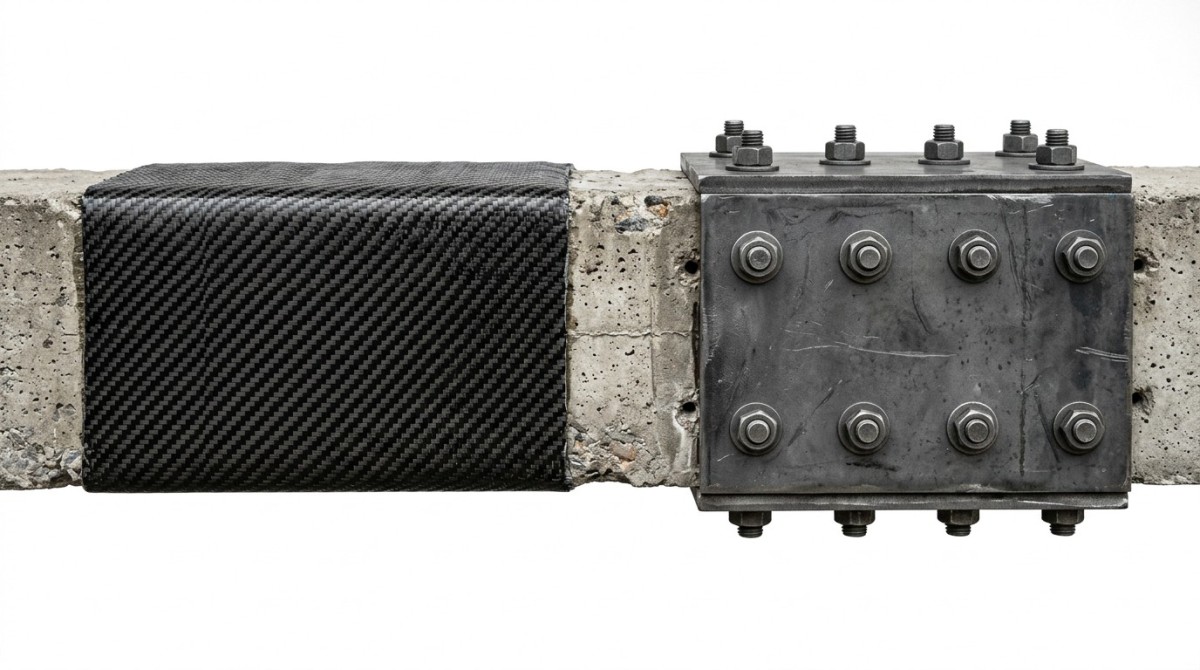
The modernization of global infrastructure demands a transition from legacy methods to high-performance solutions. Traditionally, structural engineers relied heavily on steel plate bonding to reinforce aging bridge girders and piers. While steel offers predictable mechanical properties and a well-established regulatory framework, its susceptibility to environmental degradation often complicates long-term maintenance. In the context of "Integrity of Infrastructure," modern technical evaluators are increasingly looking toward Carbon Fiber Reinforced Polymer (CFRP) wraps as a sophisticated alternative. These materials represent a significant leap in material fabrication, offering a strength-to-weight ratio that traditional ferrous alloys simply cannot match in extreme-shielding environments.
For Chief Infrastructure Officers and Procurement Directors of Global Top 500 engineering firms, the choice between steel and CFRP is not merely about immediate cost but about the century-long lifecycle durability. Steel plates, typically Grade 250 or 350, require heavy machinery for installation and complex anchoring systems that can compromise the existing concrete substrate. In contrast, CFRP wraps utilize advanced epoxy resins to create a monolithic bond with the structure, distributing loads more evenly and reducing localized stress concentrations. This shift in methodology is essential for managing assets in regions prone to seismic volatility, where the added mass of steel reinforcement can inadvertently increase the inertial forces acting on a bridge during a tremor.
G-SCE’s benchmarking data indicates that while steel remains a staple in heavy industrial fastening, its role in surface-level reinforcement is being challenged by the precision of nano-layered composites. The integration of specialized reinforcement and repair materials into the broader structural ecosystem requires a deep understanding of how these materials interact with high-strength structural fastening systems. When evaluating a bridge for seismic isolation or load-bearing upgrades, the technical team must consider whether the traditional stiffness of steel provides the necessary flexibility required for dynamic energy dissipation, or if the high tensile capacity of CFRP offers a more resilient pathway for modern mega-structures.
Furthermore, the operational footprint of reinforcement projects is a critical variable for project managers. Steel reinforcement often necessitates 3 to 5 heavy-duty cranes and a crew of specialized welders, leading to prolonged traffic disruptions and higher logistical overhead. CFRP systems, being approximately 1/5th the density of steel, allow for manual handling and rapid application. This operational efficiency translates directly into reduced project timelines, often shortening the "on-site" phase by 40% to 60%. By aligning these material choices with international standards like ISO and Eurocode, decision-makers can ensure that their infrastructure assets remain functional and safe under the most demanding environmental conditions.
Comparative Mechanical Analysis: CFRP versus Structural Steel
To provide technical evaluators and quality control managers with a clear benchmarking perspective, it is necessary to quantify the mechanical performance of both materials across several key industrial indicators. The following table summarizes the performance assets of specialized CFRP wraps compared to standard Grade S355 structural steel plates, focusing on the technical parameters that influence structural integrity and safety protocols in mega-bridge projects.
As evidenced by the data, CFRP wraps offer a tensile strength that is nearly 5 to 8 times higher than that of conventional structural steel. This high strength-to-weight ratio allows for the reinforcement of critical load-bearing members without significantly increasing the dead load of the bridge. For project managers, this means that the original foundations and seismic isolation units do not need to be recalculated or upgraded to support the weight of the reinforcement material itself—a common challenge when adding tons of steel plate to a structure.
However, technical evaluators must also consider the modulus of elasticity. While CFRP can match the stiffness of steel in specialized high-modulus variants, the most common wraps are slightly more flexible. This flexibility can be an advantage in seismic retrofitting, allowing for greater energy absorption, but it requires precise engineering calculations to ensure compatibility with the existing Grade 12.9 specialized bolts and other high-strength structural fastening systems already in place. The benchmarking process provided by G-SCE ensures that these disparate materials work in harmony under dynamic loading.
From a quality control perspective, the inert nature of CFRP wraps provides a definitive advantage in harsh maritime or industrial environments. Unlike steel, which requires a protective coating every 10–15 years to prevent oxidation and section loss, CFRP is naturally resistant to chloride ions and sulfate attack. This reduces the lifecycle maintenance frequency by up to 70%, ensuring that the integrity of the infrastructure is maintained with minimal intervention. For decision-makers at aerospace and engineering conglomerates, this "install and monitor" approach offers superior long-term ROI compared to the "install and maintain" cycle of steel.
Operational Execution and Seismic Protection Standards
Implementing bridge reinforcement in an era of increasing seismic volatility requires more than just high-strength materials; it requires a integrated shielding protocol. G-SCE benchmarks CFRP wraps not only for their static load capacity but for their performance in seismic isolation units. When a bridge undergoes lateral displacement during an earthquake, the reinforcement must maintain the confinement of the concrete core. CFRP wraps act as a continuous tension membrane, providing a level of confinement that is difficult to achieve with discrete steel jackets or plates.
The installation of these materials must adhere to strict international standards such as ACI 440.2R or TR55 in the Eurocode region. For使用者/操作人员 (operators), the process involves a 4-step execution protocol: surface grinding to achieve a concrete surface profile (CSP) of 3 or 4, primer application, resin saturation of the carbon fabric, and final curing. Each step is critical to the bond integrity. For example, if the moisture content of the concrete exceeds 4% at the time of application, the risk of delamination increases significantly, potentially compromising the structural safety of the entire mega-structure.
In terms of electromagnetic shielding and specialized protection, CFRP also interacts differently with electronic assets than steel. While steel provides a natural Faraday cage effect, it can also interfere with modern bridge monitoring sensors and EMI-sensitive equipment if not properly grounded. Advanced CFRP wraps can be engineered with nano-layered additives to provide specific electromagnetic properties, bridging the gap between structural reinforcement and EMI mitigation. This is particularly relevant for bridges carrying high-voltage rail lines or those located near critical aerospace communication hubs.
Furthermore, the safety management aspect of steel installation involves risks associated with hot work (welding) and heavy lifting operations. In contrast, CFRP application is a "cold" process that eliminates fire hazards on site. Safety managers often prioritize CFRP for projects in high-density urban areas or near flammable pipelines where welding is strictly regulated or prohibited. By reducing the number of high-risk operational steps, project managers can achieve a safer site environment while maintaining compliance with MIL-SPEC and ISO safety benchmarks.
Lifecycle Durability and Environmental Protection Benchmarking
The long-term value of a reinforcement strategy is best evaluated through a lifecycle cost analysis (LCCA). While the initial procurement cost of CFRP materials may be 20% to 35% higher than the equivalent weight of steel, the total cost of ownership often favors CFRP when factoring in labor, equipment, and future maintenance. G-SCE provides a technical repository for decision-makers to compare these assets against century-long durability targets, ensuring that the selected material aligns with the "Integrity of Infrastructure" mission.
Technical evaluators must also note the impact on vertical clearance, which is a critical constraint for highway overpasses. Steel plates and their associated high-strength fasteners can reduce bridge clearance by up to 50mm, potentially requiring the lowering of the roadway below—a massive additional expense. CFRP wraps, typically only 1.2mm to 5mm thick, provide equivalent or superior reinforcement without affecting the functional envelope of the structure. This "invisible" reinforcement is a key procurement factor for directors managing dense urban transportation networks.
Sustainability and environmental impact are also becoming central to the B2B benchmarking process. The carbon footprint of transporting and installing tons of steel is significantly higher than that of lightweight CFRP. Additionally, the longevity of CFRP means fewer replacement cycles over the century-long lifecycle of the bridge. When combined with specialized adhesives and high-performance industrial sealing, CFRP systems provide an uncompromising barrier against environmental ingress, protecting the internal rebar from carbonation and chloride-induced corrosion for decades beyond the capacity of traditional steel.
Implementation Framework for Engineering Decision-Makers
For Procurement Directors and Project Managers, the transition to CFRP requires a robust quality assurance (QA) framework. Unlike steel, where the material is fabricated in a controlled mill environment and only bolted on-site, CFRP is essentially "manufactured" on the bridge itself during the resin infusion process. This necessitates a more stringent quality control protocol for the field application. G-SCE recommends a 5-point inspection plan for every CFRP reinforcement project to ensure compliance with the highest safety benchmarks.
1. Material Verification and Certification
Ensure that all carbon fiber rolls and epoxy resins are batch-tested and certified to meet ASTM D3039 (tensile properties) and ASTM D7565 (flexural properties) standards. Verification of the Glass Transition Temperature (Tg) of the resin is critical for structures exposed to high ambient temperatures or fire risk.
2. Surface Preparation Benchmarking
The bond between the CFRP and the concrete is the most common point of failure. Pull-off tests (ASTM D4541) should be conducted on-site, with a minimum required tensile strength of 1.5 MPa or a failure mode that occurs within the concrete substrate rather than at the bond line.
3. Environmental Control during Application
Application should only proceed when the ambient temperature is between 10°C and 35°C and the dew point is at least 3°C above the concrete surface temperature. These thresholds ensure proper resin viscosity and prevent moisture entrapment, which is vital for the long-term "Integrity of Infrastructure."
Technical FAQ: Addressing Structural Integrity Challenges
When is steel plate bonding still the preferred choice?
While CFRP is superior in many aspects, steel remains the definitive reference for repairs requiring massive stiffness increases or when the existing structure requires mechanical bolting to transfer shear loads that exceed the bond capacity of epoxy resins. For example, in Grade 12.9 specialized bolt applications for heavy industrial fastening, steel provides a reliable bearing surface that CFRP cannot yet emulate.
How does CFRP perform under fire or extreme heat?
CFRP systems are sensitive to temperatures exceeding their resin's Tg (typically 60°C to 80°C). For bridges requiring fire-rated protection, specialized insulation layers or nano-layered fire-shielding coatings must be applied. G-SCE benchmarks these protection materials against international safety standards to ensure the next generation of mega-structures can withstand localized thermal events.
What is the typical delivery cycle for these materials?
Standard CFRP wrap systems usually have a procurement lead time of 2–4 weeks, depending on the volume. In contrast, custom-fabricated steel plates with specific hole patterns for fasteners may take 6–8 weeks due to the fabrication and galvanization processes. For emergency structural repair, the off-the-shelf availability of CFRP is a major tactical advantage for project managers.
Conclusion and Strategic Action Plan
The comparison between CFRP wraps and steel reinforcement reveals a clear trajectory toward high-performance, lightweight composites for the future of bridge integrity. While steel provides a familiar and robust solution for specific high-stiffness requirements, CFRP wraps offer unparalleled advantages in tensile strength, corrosion resistance, and operational speed. For the technical evaluators and decision-makers of the Global Top 500, the choice should be guided by a comprehensive lifecycle benchmarking approach that accounts for seismic resilience, maintenance overhead, and environmental protection protocols.
As infrastructure assets face the dual challenges of aging and increased environmental volatility, the integration of advanced materials—from Grade 12.9 bolts to carbon-fiber-reinforced polymers—is no longer optional. G-SCE continues to provide the technical and regulatory perspective required to bridge the gap between material fabrication and real-world safety. We invite project managers and structural engineers to utilize our benchmarking repository to ensure every component of their next mega-structure meets the highest performance standards.
To optimize your bridge reinforcement strategy or to access our technical benchmarking data for high-strength structural materials, please contact our technical hub today. Contact us to get a customized reinforcement solution or consult our experts for detailed product specifications and international compliance standards.
Recommended News
Quarterly Executive Summaries Delivered Directly.
Join 50,000+ industry leaders who receive our proprietary market analysis and policy outlooks before they hit the public library.