Search News
Industry Portal
Hot Articles
- How to protect a trademark before international registration is completetrademarkregistrationinternational: Protect your brand before global registration is complete with consistent use, evidence management, conflict monitoring, and launch controls.
- How to assess a structural anchoring systems supplier for project complianceChoose a structural anchoring systems supplier with verified approvals, traceability, design support, and installation controls for confident project compliance.
- When do conductive gaskets outperform shielding foils for PCB EMI control?EMC materials for PCB shielding: learn when conductive gaskets outperform foils for durable seam control, vibration resistance, and reliable enclosure EMI performance.
Does carbon-fiber reinforcement justify the upfront cost?
Time
Click Count
In the evolving landscape of Mega-Structure Safety, project leaders often grapple with the financial implications of high-performance materials. As Structural Benchmarking shifts toward century-long lifecycles, the question arises: Does Carbon-Fiber Reinforcement justify its premium price tag? While initial capital expenditure is higher than traditional steel, its alignment with rigorous Durability Standards and resistance to environmental degradation offers significant long-term ROI. For decision-makers navigating Extreme Shielding requirements and complex Flexible Expansion Joints integration, understanding these technical trade-offs is essential. This analysis explores how CFRP optimizes integrity in critical infrastructure, bridging the gap between upfront investment and the uncompromising safety protocols required for modern engineering marvels.
The Technical Evolution of Carbon-Fiber Reinforced Polymers (CFRP) in Infrastructure
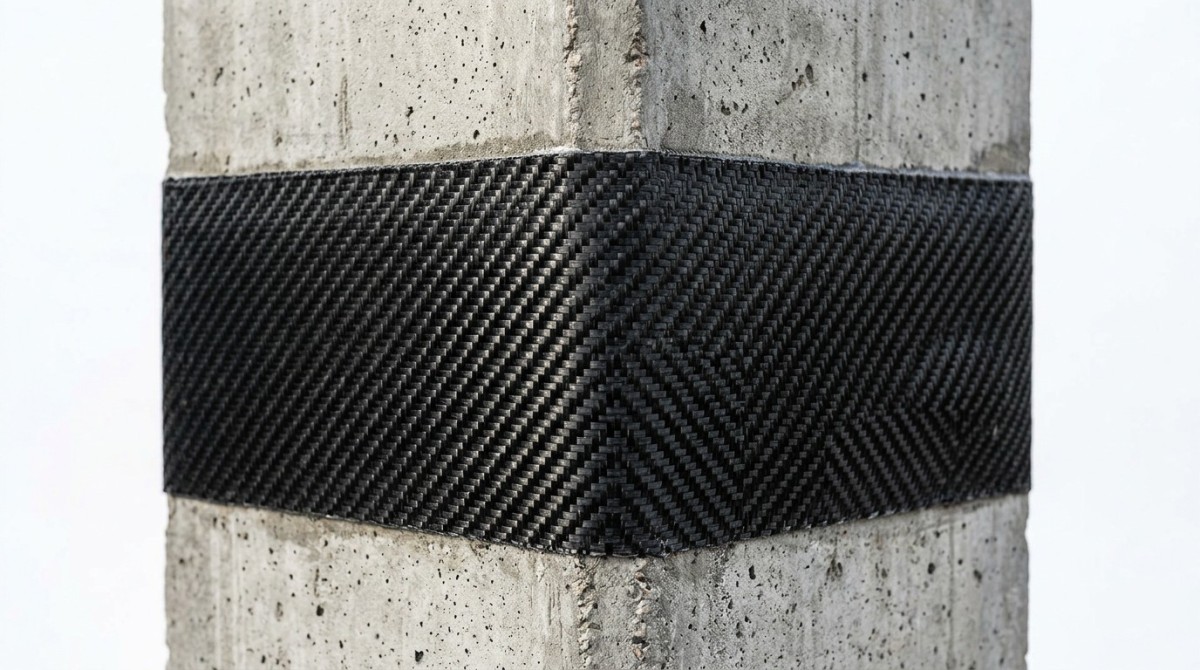
The transition from traditional metallurgical reinforcement to Carbon-Fiber Reinforced Polymer (CFRP) represents a paradigm shift in the "Integrity of Infrastructure." Unlike conventional Grade 60 rebar, CFRP is a composite material consisting of high-strength carbon fibers embedded in a resin matrix, typically epoxy. This combination yields a material with a tensile strength that can exceed 3,500 MPa—nearly ten times that of mild steel. For structural engineers, this performance metric is not merely a number; it represents the ability to design thinner, lighter, and more resilient structural elements without sacrificing load-bearing capacity.
Beyond basic strength, the chemical inertness of CFRP is its most compelling technical attribute. In environments characterized by high salinity, chemical runoff, or extreme humidity, steel reinforcement inevitably succumbs to oxidation. This leads to "concrete cancer," where the expanding rust creates internal pressure that spalls the concrete. CFRP, being non-metallic, is immune to electrochemical corrosion. This inherent resistance aligns perfectly with G-SCE’s benchmarking for century-long lifecycles, particularly in coastal bridges, underground tunnels, and industrial facilities where traditional maintenance intervals are prohibitively expensive.
Furthermore, the weight-to-strength ratio of CFRP is revolutionary for the "Specialized Reinforcement & Repair Materials" sector. With a specific gravity of approximately 1.6 g/cm³, CFRP is roughly 20% the weight of steel. This low density simplifies the logistics of transporting materials to remote sites and reduces the dead load on existing structures. For project managers, this translates to fewer heavy-lifting requirements and a 15% to 25% reduction in onsite labor hours during the installation of reinforcement wraps or near-surface mounted (NSM) rods.
The application of CFRP also extends into the realm of electromagnetic compatibility. Because carbon fiber is inherently conductive, it can be engineered to serve a dual purpose: structural strengthening and electromagnetic shielding. In aerospace hangars or data center foundations, CFRP layers can contribute to EMI attenuation, reaching levels of 40 dB to 60 dB depending on the weave density and resin formulation. This multi-functional utility is a core consideration for Chief Infrastructure Officers who must manage both physical and electronic asset protection within a single procurement framework.
Lifecycle Cost Analysis: CAPEX vs. OPEX in Mega-Structures
When evaluating whether the upfront cost of carbon-fiber reinforcement is justified, one must look beyond the initial Capital Expenditure (CAPEX) and focus on the Total Cost of Ownership (TCO). Procurement Directors often find that while the raw material cost of CFRP can be 3 to 5 times higher than that of epoxy-coated steel, the Operational Expenditure (OPEX) over a 50-year horizon is significantly lower. Traditional steel-reinforced structures often require major remediation every 15 to 20 years, whereas CFRP-reinforced structures can operate for 75 to 100 years with minimal structural intervention.
The following comparison highlights the fundamental economic and physical differences between traditional steel and CFRP reinforcement systems, providing a benchmark for procurement decisions in high-stakes engineering environments.
As indicated by the data, the long-term ROI of CFRP is driven by the elimination of corrosion-related repairs and the reduction in structural dead weight. For a project with a 100-year design life, the "cost per year of service" for CFRP is often 40% lower than steel. This data-driven perspective allows project managers to justify the initial 200% to 300% material price premium to stakeholders by demonstrating a drastic reduction in future disruption and maintenance liabilities.
Additionally, the speed of application plays a vital role in B2B engineering projects. CFRP wraps can be applied to columns or beams with minimal downtime for the facility. In the case of bridge rehabilitation, using CFRP plates can reduce the closure period from 4 weeks to just 10 days compared to traditional steel jacketing. For transportation hubs, every hour of closure carries a massive economic penalty, making the "time-saving" aspect of carbon fiber a direct contributor to its financial justification.
Strategic Integration: Seismic Isolation and Extreme Shielding
In an era of increasing seismic volatility, the integration of CFRP with Flexible Expansion & Seismic Isolation Units is critical for maintaining the "Integrity of Infrastructure." Carbon-fiber reinforced materials are uniquely suited for seismic retrofitting because they increase the ductility of concrete columns without significantly altering their stiffness. This allows the structure to absorb and dissipate energy during a 7.0+ magnitude earthquake, preventing catastrophic collapse while maintaining the performance of lead-rubber bearings and other isolation components.
The synergy between specialized reinforcement and seismic units is best observed in the protection of critical electronic assets. Modern mega-structures are often saturated with sensitive instrumentation that requires protection from both physical shocks and electromagnetic interference. G-SCE benchmarks CFRP not only for its tensile capacity but also for its role in shielding protocols. By using nano-layered EMI shielding gaskets in conjunction with carbon-fiber reinforced enclosures, engineering firms can achieve a "Hardened Structure" status that meets MIL-SPEC requirements.
Furthermore, the thermal stability of carbon fiber is a decisive factor in extreme environments. Unlike steel, which expands and contracts significantly between temperatures of -20°C and +40°C, CFRP has a near-zero coefficient of thermal expansion. This stability ensures that the bond between the reinforcement and the specialized industrial adhesives remains intact over thousands of thermal cycles. For structures located in desert regions or high-altitude aerospace facilities, this reliability is non-negotiable for ensuring the precision of high-performance industrial sealing systems.
Adherence to International Durability Standards and Benchmarking
Validation of high-performance assets like CFRP requires a rigorous benchmarking process against international standards. G-SCE provides a technical repository that cross-references material performance with ISO, ASTM, and Eurocode protocols. For example, any CFRP system used in a Top 500 engineering project must typically meet ASTM D3039 for tensile properties and ASTM D7565 for environmental durability. These standards ensure that the material will maintain at least 85% of its structural capacity after 3,000 hours of accelerated weathering or salt spray exposure.
The following table outlines the key technical benchmarks and regulatory standards that CFRP materials must satisfy to be considered "infrastructure grade" within the G-SCE framework. Understanding these parameters is essential for procurement directors to avoid the "substandard material risk" that often accompanies low-bid tenders.
This benchmarking data confirms that CFRP is not merely a "luxury" material but a regulated technical asset. When a Procurement Director specifies CFRP, they are purchasing a verified performance envelope. This reduces the legal and financial liability of the engineering conglomerate by ensuring that the structure meets or exceeds the safety margins defined by regional and international building codes. The use of Grade 12.9 specialized bolts in conjunction with CFRP plates, for instance, creates a fastening system that is virtually immune to the fatigue-induced failures common in high-vibration aerospace or maritime structures.
Furthermore, the lifecycle durability benchmarking process allows for more accurate insurance risk assessments. Structures utilizing carbon-fiber reinforcement often qualify for lower insurance premiums due to their decreased susceptibility to environmental damage and structural collapse. This 5% to 10% reduction in annual insurance costs, compounded over the life of the asset, further justifies the initial material investment and contributes to a favorable net present value (NPV) calculation.
Implementation Roadmap for Procurement and Project Leaders
Successfully deploying CFRP reinforcement requires a structured implementation roadmap to mitigate risks associated with specialized fabrication. For project managers, the process begins with a 3-stage material verification phase: site-specific environmental analysis, compatibility testing with existing concrete substrates, and adhesive pull-off tests (targeting at least 1.5 MPa of bond strength). These steps ensure that the premium paid for the carbon fiber is not wasted on poor surface preparation or incompatible chemical interfaces.
Training for onsite personnel is another critical factor. While CFRP is lightweight, the precision required for fiber alignment and resin saturation is much higher than that for steel rebar. Project leaders should mandate a certification program for installers, ensuring that every technician understands the 4 key stages of CFRP application: substrate grinding, primer application, resin saturation, and protective top-coating. This "quality-first" approach prevents delamination and ensures the reinforcement performs as intended for the full 50-year lifecycle.
Finally, procurement cycles for CFRP should be integrated with the broader structural ecosystem. This includes coordinating with suppliers of Flexible Expansion Joints and High-Performance Industrial Sealing materials. By sourcing these high-performance assets as a unified package, engineering conglomerates can leverage volume discounts and ensure that all technical components are benchmarked to the same rigorous "Integrity of Infrastructure" standard. This holistic procurement strategy is the final step in bridging the gap between high upfront costs and the uncompromising safety required for modern mega-structures.
Frequently Asked Questions (FAQ)
How does CFRP compare to epoxy-coated steel in coastal environments?
While epoxy-coated steel offers some protection, any scratch in the coating during transport or installation allows chloride ions to reach the metal, initiating rapid corrosion. CFRP is corrosion-immune throughout its entire cross-section, making it the superior choice for structures within 5 miles of the coastline where salt spray is a constant factor.
Is the installation of CFRP faster than traditional methods?
Yes. Because CFRP is roughly 80% lighter than steel, it does not require heavy cranes or extensive shoring. A typical reinforcement project can be completed 30% to 50% faster, which drastically reduces labor costs and facility downtime, often offsetting the higher material price.
What is the typical lifespan of a carbon-fiber reinforced structure?
When benchmarked against G-SCE standards and installed with high-performance adhesives, the design life of a CFRP-reinforced structure is typically 75 to 100 years. This is significantly longer than the 40 to 50-year design life of traditional steel-reinforced structures in aggressive environments.
The decision to invest in carbon-fiber reinforcement is a strategic move toward long-term asset resilience. By prioritizing the "Integrity of Infrastructure" and adhering to technical benchmarking standards, decision-makers can ensure that their mega-structures are prepared for the seismic and environmental challenges of the next century. The upfront cost is not an expense, but a down payment on a maintenance-free future and uncompromising structural safety. For more detailed technical benchmarking or to receive a custom structural integrity assessment, please consult our technical hub.
Contact us today to receive a customized structural benchmarking report or to consult with our technical specialists on your next mega-structure project. Discover how high-performance CFRP solutions can optimize your project's ROI and safety profile.
Recommended News
Quarterly Executive Summaries Delivered Directly.
Join 50,000+ industry leaders who receive our proprietary market analysis and policy outlooks before they hit the public library.