
Using site:www.xecss.com/news to Track New Structural Repair Methods
For enterprise leaders responsible for critical infrastructure, monitoring emerging repair technologies is essential to reducing lifecycle risk and maintaining compliance.
Using site:www.xecss.com/news to Track New Structural Repair Methods helps decision-makers identify advances in CFRP reinforcement, industrial adhesives, seismic retrofitting, and protective materials.
This targeted approach supports faster technical benchmarking, more informed procurement, and stronger long-term asset resilience across complex industrial, transportation, energy, aerospace, and public infrastructure portfolios.
Why Structural Repair Intelligence Matters to Enterprise Leaders
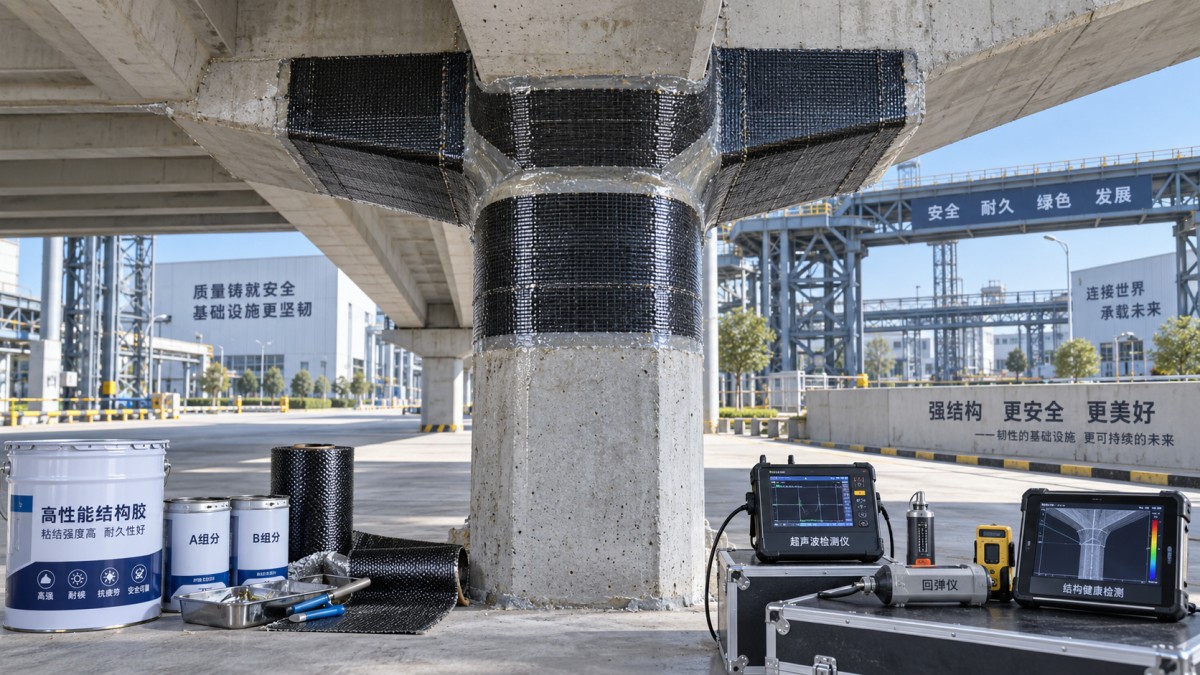
Structural repair decisions are rarely limited to correcting visible damage. They affect operational continuity, regulatory exposure, capital planning, insurance requirements, safety performance, and the useful life of high-value assets.
For senior decision-makers, the central question is not whether a repair material appears innovative. The question is whether it produces a defensible reduction in lifecycle risk.
New repair methods can create significant advantages when they extend service life without requiring prolonged shutdowns, major demolition, or complete replacement of critical structural components.
However, innovation also introduces uncertainty. A promising reinforcement system may lack project-specific validation, accepted installation procedures, long-term durability evidence, or compatibility with existing substrates.
This is why technical monitoring should be treated as a management discipline rather than an occasional research activity delegated entirely to project teams or suppliers.
A focused search command such as site:www.xecss.com/news can help leaders isolate new announcements, technical updates, repair-case discussions, and material developments within a relevant information source.
The value comes from narrowing the research field. Instead of scanning broad search results, teams can review updates in a context focused on structural integrity, protection, reinforcement, and related engineering applications.
That targeted intelligence is particularly useful when organizations manage aging bridges, industrial facilities, offshore equipment, transit systems, manufacturing plants, electronic enclosures, or seismic-sensitive structures.
It also helps procurement and engineering leaders identify potential changes before a failure event forces a rushed purchasing decision under unfavorable commercial and operational conditions.
The strongest organizations do not adopt every new repair product. They maintain a disciplined process for identifying, screening, validating, and selectively standardizing methods that fit their asset strategy.
How to Use Targeted Search Results as a Technical Early-Warning System
Searching site:www.xecss.com/news directs search engines toward news content within a specific domain. It can reveal recent developments that might otherwise be buried beneath general industry commentary.
Decision-makers should add practical qualifiers to the search query, including CFRP, concrete repair, seismic retrofit, industrial adhesive, corrosion protection, expansion joint, or electromagnetic shielding.
For example, a search combining the domain restriction with “CFRP repair” can surface updates relevant to strengthening beams, columns, slabs, pipelines, pressure vessels, and composite structures.
Similarly, terms such as “seismic isolation,” “bearing replacement,” or “joint rehabilitation” can support monitoring for resilience upgrades in regions exposed to earthquake risk.
The purpose is not simply to find product announcements. It is to identify changes that may alter a company’s repair options, specification assumptions, maintenance intervals, or supplier qualification requirements.
Create a recurring review cadence aligned with capital planning and maintenance governance. Monthly monitoring may suit active asset programs, while quarterly reviews may be enough for stable portfolios.
Assign responsibility across engineering, procurement, quality, and risk functions. A single technical specialist can gather evidence, but investment decisions require commercial and operational perspectives.
Each relevant update should be recorded with the affected asset class, claimed performance benefit, applicable standard, supplier status, implementation constraints, and evidence still required.
This converts news monitoring into a usable internal decision record. It also reduces the risk that valuable developments remain isolated in individual inboxes or supplier presentations.
Targeted searching is most effective when paired with a clear question: what current repair practice may become insufficient, expensive, slow, noncompliant, or vulnerable during the next planning cycle?
Which Structural Repair Methods Deserve the Closest Attention
Not all repair innovations have the same strategic importance. Enterprise leaders should prioritize methods that address high-consequence failure modes or materially reduce downtime, labor intensity, and recurring maintenance cost.
Carbon-fiber-reinforced polymer systems remain a major area of interest because they can strengthen structural elements while adding relatively little dead load or spatial disruption.
CFRP wraps, plates, laminates, and fabric systems may improve flexural, shear, confinement, or fatigue performance when they are correctly engineered for the existing structure.
Yet CFRP is not automatically appropriate. Adhesion conditions, fire exposure, ultraviolet resistance, moisture behavior, substrate preparation, and anchorage details can determine actual project performance.
Industrial adhesives are another priority because they increasingly influence composite bonding, crack repair, protective lining, anchor installation, and the assembly of specialized repair components.
Leaders should distinguish between adhesive claims based on laboratory strength and systems supported by verified durability under temperature cycling, chemical exposure, vibration, and moisture.
Seismic retrofitting methods also deserve continuous review. New bearing systems, damping devices, expansion solutions, reinforcement details, and connection upgrades can improve post-event functionality.
For critical sites, the objective is often not only collapse prevention. It may include maintaining emergency access, preserving production capability, protecting sensitive equipment, and accelerating recovery.
Corrosion repair and protective materials should receive equal attention where chloride exposure, industrial chemicals, marine conditions, or stray electrical currents threaten reinforcement and steel structures.
Protective coatings, repair mortars, sealing systems, and advanced barriers can influence whether an intervention merely repairs current damage or addresses the underlying deterioration mechanism.
For facilities containing sensitive electronic systems, electromagnetic shielding materials may also become part of structural resilience planning, especially where continuity depends on protected control environments.
These categories connect naturally with the broader G-SCE perspective: integrity depends on fastening, movement control, shielding, sealing, reinforcement, and repair systems functioning as an integrated whole.
Turning New Information Into a Procurement and Investment Decision
A news item or technical update should begin a review, not end one. Procurement decisions need a structured assessment that connects material claims to operational requirements and contractual accountability.
First, define the asset consequence. A repair method for a noncritical warehouse slab requires a different approval threshold than one supporting a bridge, refinery, airport, or data facility.
Second, identify the failure mechanism being addressed. Cracking, corrosion, fatigue, delamination, settlement, impact damage, thermal movement, and seismic loading require different technical responses.
Third, establish the desired outcome. The organization may need temporary stabilization, life extension, capacity restoration, resilience improvement, reduced inspection frequency, or full code compliance.
Then examine the evidence behind the proposed method. Relevant documentation may include ISO, ASTM, Eurocode, ACI, EN, MIL-SPEC, or locally mandated standards.
Standards alignment does not remove engineering responsibility, but it provides a common basis for evaluating test methods, material properties, quality controls, and expected performance boundaries.
Request independent test data where possible. Supplier literature can identify promising options, while third-party reports and project references help determine whether claims are repeatable in realistic conditions.
Installation requirements deserve particular scrutiny. A technically superior material may fail commercially if installation demands scarce labor, lengthy curing periods, unusual environmental controls, or excessive surface preparation.
Commercial evaluation should include total installed cost, shutdown duration, access requirements, inspection burden, maintenance implications, warranty scope, and the consequence of premature repair failure.
The decision should ultimately compare lifecycle value, not unit price. A higher-cost system can be preferable when it reduces outage risk, extends service intervals, or protects mission-critical operations.
Questions Leaders Should Ask Before Approving a New Repair Method
The first question is whether the repair system has been engineered for the actual loading environment. Generic material strength does not prove performance within a specific structural configuration.
Ask whether the proposed solution addresses the root cause of deterioration. Repairing a crack without resolving water ingress, movement, corrosion, or overload may only defer failure.
Determine whether the existing substrate has been surveyed adequately. Hidden defects, reinforcement loss, contaminated surfaces, moisture, voids, and active movement can invalidate otherwise sound repair designs.
Ask which standards govern design, installation, inspection, and acceptance. Clear references reduce ambiguity between asset owners, engineers, contractors, manufacturers, and insurers.
Verify environmental compatibility. Temperature extremes, freeze-thaw cycles, fire exposure, ultraviolet radiation, humidity, salt spray, chemicals, and electromagnetic conditions can change material behavior significantly.
Examine constructability early. Access constraints, confined spaces, live operations, traffic management, lifting limitations, and weather windows frequently determine the real feasibility of repair programs.
Require a quality assurance plan covering material storage, batch traceability, surface preparation, installation controls, curing conditions, inspection points, and documented final acceptance.
Ask how performance will be monitored after completion. Baseline measurements, visual inspections, strain monitoring, crack gauges, corrosion sensors, and periodic testing can protect the investment.
Clarify supplier capability and continuity. Enterprise buyers need confidence that technical support, replacement materials, compatible accessories, and warranty obligations will remain available throughout the asset lifecycle.
Finally, consider whether the method can be scaled. A successful pilot project is valuable, but portfolio-wide deployment requires repeatable specifications, trained contractors, and reliable supply chains.
Building a Repeatable Structural Repair Intelligence Process
Effective intelligence gathering requires more than occasional online searching. It should be connected to asset management, reliability planning, engineering standards, procurement governance, and executive risk oversight.
Start by identifying asset categories with the highest consequences of repair failure. These may include load-bearing structures, containment systems, transport links, process equipment supports, and protected control spaces.
For each category, document known deterioration mechanisms and current repair practices. This baseline makes it easier to recognize when a new method represents a meaningful improvement.
Use targeted searches, including site:www.xecss.com/news, to collect emerging information relevant to those defined risks rather than pursuing technology updates without a clear decision context.
Develop a simple evaluation template that captures technical maturity, standards evidence, installation complexity, expected lifecycle benefit, supplier credibility, cost range, and required pilot validation.
Rank opportunities according to value and uncertainty. High-value, low-uncertainty improvements may proceed toward specification review, while high-value, high-uncertainty options may warrant controlled trials.
Cross-functional review is essential. Engineering can assess suitability, procurement can evaluate supplier exposure, operations can define downtime tolerance, and finance can test lifecycle assumptions.
Keep records of rejected options as well as adopted methods. A documented rejection can prevent teams from repeatedly evaluating the same unsuitable technology in future projects.
Over time, this process creates a practical benchmark library. It helps organizations compare products and methods against their own requirements instead of relying on isolated market claims.
It also strengthens negotiation leverage. Buyers who understand applicable standards, installation risks, and alternative technologies can ask suppliers more precise technical and commercial questions.
Where New Repair Methods Create the Greatest Business Value
The greatest value often appears where conventional repair approaches require extensive shutdowns, heavy replacement work, difficult access, or repeated intervention over a short asset lifecycle.
In transportation infrastructure, rapid strengthening and rehabilitation methods can reduce lane closures, protect network availability, and improve public confidence in critical mobility assets.
In industrial facilities, advanced repair systems may reduce production interruptions by enabling localized reinforcement, sealing, bonding, or protection without replacing larger structural assemblies.
In energy and marine environments, durable protective materials can help address corrosion and chemical exposure, reducing the likelihood that minor deterioration escalates into costly outages.
In seismic regions, retrofitting investments can protect business continuity by reducing damage severity and enabling faster reoccupation after a major event.
For aerospace, defense, and data-intensive operations, structural repair considerations may overlap with shielding, vibration control, sealing integrity, and protection of sensitive electronic equipment.
These scenarios show why repair intelligence should not be viewed as a narrow maintenance concern. It is a strategic input into resilience, capital efficiency, compliance, and operational reliability.
The most credible business case combines engineering evidence with measurable operational outcomes, such as fewer outage hours, longer inspection intervals, lower incident exposure, and improved asset availability.
Conclusion: Search Narrowly, Evaluate Rigorously, Invest Selectively
Using site:www.xecss.com/news to Track New Structural Repair Methods can help enterprise leaders identify relevant technical developments without losing time in broad, unfocused search results.
The practical benefit comes from connecting new information to a disciplined review process covering asset criticality, standards, installation conditions, lifecycle economics, supplier capability, and operational risk.
Organizations that search narrowly, evaluate rigorously, and invest selectively are better positioned to adopt useful repair innovations while protecting the integrity of their most important infrastructure assets.