
Search News
Industry Portal
Hot Articles
- NHAI Engineers Link Bridge Component Defects to Premature CrackingNHAI engineers link bridge component defects to premature cracking. Discover how bearings, expansion joints and drainage affect bridge durability.
- How to verify a structural repair mortar supplier's test dataVerify a structural repair mortar supplier’s test data with confidence. Learn how to assess reports, lab accreditation and project suitability before you buy.
- How do shear studs transfer load in composite beams?Shear studs transfer load between steel beams and concrete slabs. Discover how they work and what affects capacity, spacing, and design.
NHAI Engineers Link Bridge Component Defects to Premature Cracking
Time
Click Count
Research by engineers at the National Highways Authority of India (NHAI) identifies neglected bearings, expansion joints and drainage systems as major contributors to premature cracking in highway bridges. The findings draw attention to installation errors, poor maintenance and departures from specifications as factors that can put the intended 100-year design life at risk.
The research shifts attention toward components that allow a bridge to carry loads and accommodate movement. Bearings transfer loads from the bridge deck to its supporting structure, while expansion joints accommodate movement caused by temperature changes and other factors. When these components fail to perform their intended functions, the consequences can extend beyond the components themselves to the durability of the bridge.
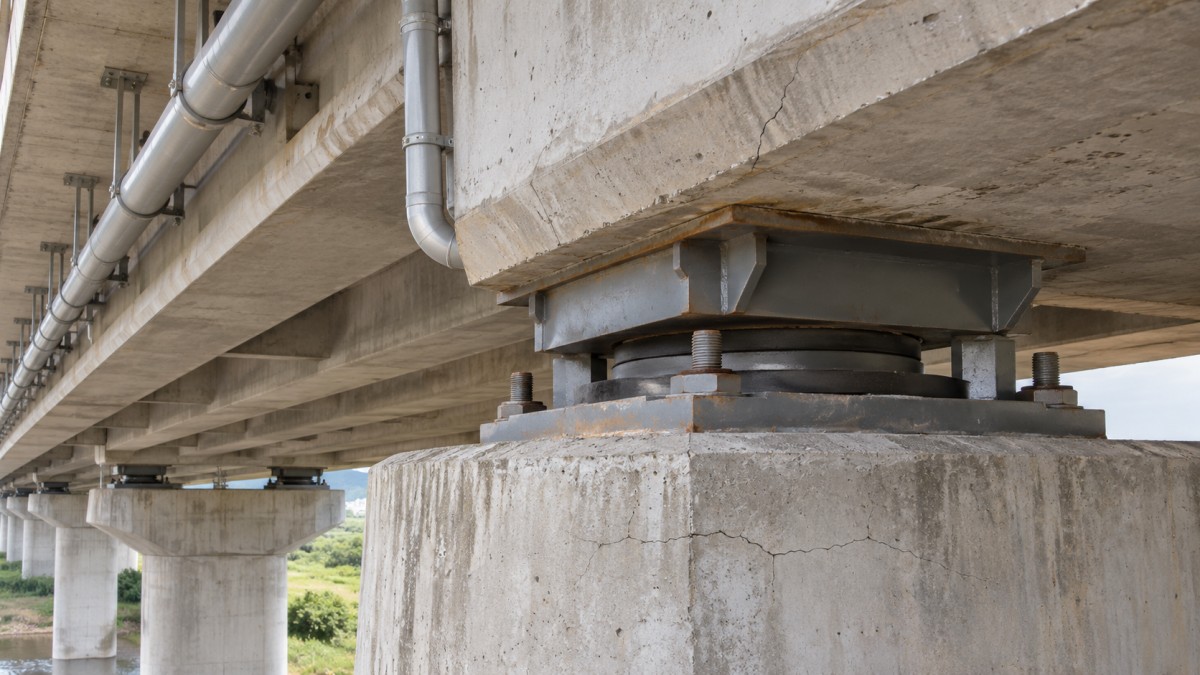
How component defects relate to cracking
The distinction between a crack and its underlying cause matters for maintenance decisions. The study points to a chain in which incorrect installation, inadequate maintenance or a departure from specifications can compromise bearings, joints or drainage. A resulting component problem can then contribute to conditions associated with premature cracking.
That does not mean every bridge crack has the same cause. The research highlights particular components and practices as major concerns; it does not establish that they are responsible for every instance of cracking. Assessing a specific bridge would require attention to the condition and installation of its components as well as the cracking itself.
Bearings are especially relevant because they connect the deck’s load path to the supporting structure. Their condition is therefore more than a matter of replacing an isolated part: the way a bearing is installed and maintained can affect how the bridge performs over time. Expansion joints serve a different but related function. They accommodate movement, so defects or poor maintenance can interfere with the bridge’s ability to respond as intended to changing conditions.
Drainage is the third part of the research’s finding. Its inclusion indicates that durability assessments should consider how the bridge manages water alongside the condition of its mechanical components. The information reported does not establish the relative contribution of drainage, bearings and joints, so their importance should not be ranked from the finding alone.
Implications for inspection and maintenance
For bridge owners and maintenance teams, the immediate significance is the need to look beyond visible cracking when considering potential causes. The research supports examining whether bearings and expansion joints were installed correctly, whether their maintenance has been adequate and whether relevant work has followed specifications. Drainage condition also belongs in that assessment.
For those involved in construction and installation, the finding places attention on the connection between specified requirements and work on the bridge. A component can be selected for an intended function, but its contribution to durability also depends on how it is installed and maintained. The study does not describe particular installation methods or specify changes to existing requirements.
The 100-year figure is a design-life objective, not a guarantee that every bridge will reach that age. The research indicates that neglected components can threaten that objective through premature cracking. Whether a particular intervention will extend the service life of a given bridge depends on its condition and the causes of deterioration.
Further detail on the research’s assessment of component defects and the condition of affected bridges would help clarify how its findings can guide inspection and repair priorities. For now, its clearest message is that bearings, expansion joints and drainage deserve attention as connected elements of bridge durability.
- Last One:No more articles
- Next Article:How to verify a structural repair mortar supplier's test dataNov 23, 2026
Recommended News
Quarterly Executive Summaries Delivered Directly.
Join 50,000+ industry leaders who receive our proprietary market analysis and policy outlooks before they hit the public library.