Search News
Global Structural-Connectors & Extreme-Shielding (G-SCE)Industry Portal
Global Structural-Connectors & Extreme-Shielding (G-SCE)Hot Articles
Global Structural-Connectors & Extreme-Shielding (G-SCE)- Why common durability standards fail in coastal areasMaster mega-structure safety with structural benchmarking. Why common durability standards fail in coastal zones and how carbon-fiber reinforcement and flexible expansion joints ensure shielding.
- Should you switch to flexible expansion joints this year?Switch to Flexible Expansion Joints for Mega-Structure Safety. Meet high Durability Standards with Carbon-Fiber Reinforcement and Extreme Shielding. Access the latest Structural Benchmarking news today.
- Hidden risks in mega-structure safety assessmentsEnsure Mega-Structure Safety via Structural Benchmarking. Explore Durability Standards, Flexible Expansion Joints, Carbon-Fiber Reinforcement & fastener quality control technology news. Learn more!
Popular Tags
Global Structural-Connectors & Extreme-Shielding (G-SCE)Industry NewsEMI mitigation: Why conductive gaskets leak signals
auth.Dr. Victor GearTime
Apr 24, 2026Click Count
EMI mitigation: Why conductive gaskets leak signals
In the complex landscape of high-frequency infrastructure, effective EMI Mitigation is paramount to maintaining Structural Safety and operational integrity. While conductive gaskets are fundamental to modern Shielding Protocols, many engineering professionals encounter the frustrating phenomenon of signal leakage. This article explores why these critical Engineering Materials fail under pressure, examining the intersection of Material Fabrication precision and long-term Structural Durability. By understanding the technical nuances behind gasket performance, Infrastructure Materials experts and project managers can better navigate the rigorous demands of global aerospace and engineering standards, ensuring their mission-critical systems remain impervious to electromagnetic interference.
The Illusion of Electrical Continuity: Why Surface Contact Fails
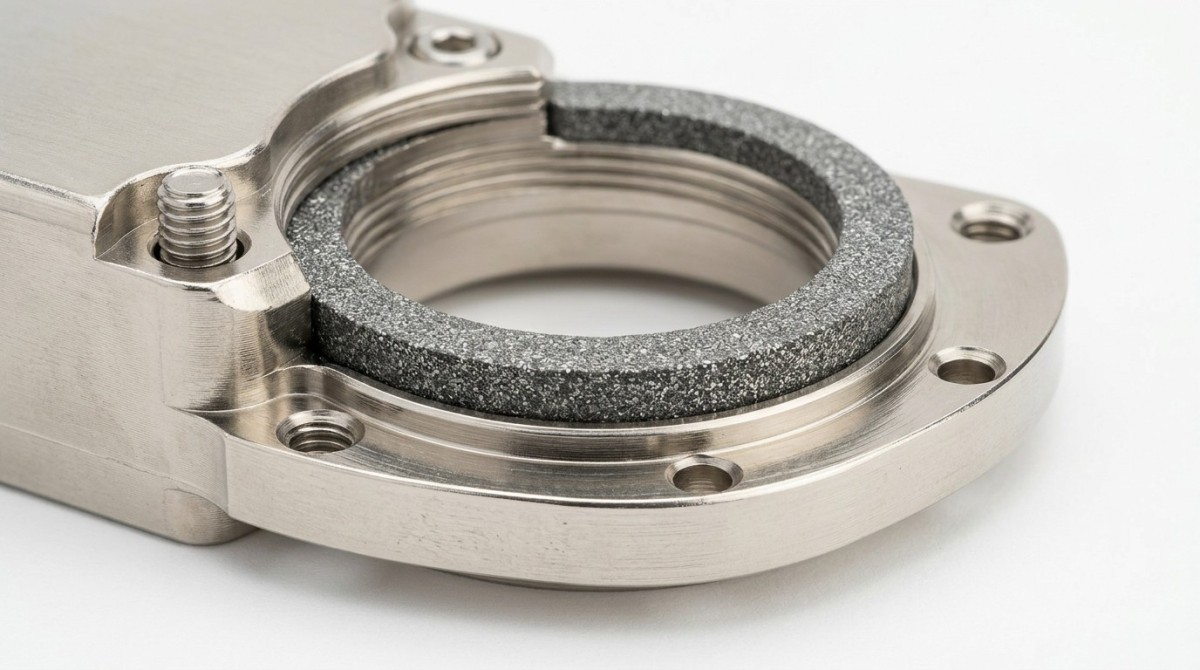
To technical evaluators and QC managers, a conductive gasket often appears as a simple "bridge" designed to close an electromagnetic gap. However, the most common reason for signal leakage is not the gasket material itself, but the failure to achieve low-impedance electrical continuity across the mating surfaces. In high-stakes B2B environments—such as aerospace enclosures or seismic monitoring hubs—even microscopic irregularities in the housing surface can create high-resistance contact points. If the surface treatment of the flange (e.g., chromate conversion or nickel plating) is incompatible with the gasket’s conductive filler (such as silver-plated aluminum or nickel-graphite), galvanic corrosion will inevitably occur. This corrosion creates an insulating layer that "leaks" signals, compromising the shielding effectiveness (SE) specified in MIL-DTL-83528 or ISO standards.

Mechanical Constraints: Compression Set and Structural Deflection
For project managers and structural engineers, the longevity of a shielding solution is tied to mechanical performance. A primary cause of leakage is the "Compression Set"—the permanent deformation of the gasket after being under load. If a gasket is over-compressed during installation to compensate for poorly machined flanges, the elastomer loses its resiliency (recovery force). Over time, thermal cycling or structural vibrations cause the flange to deflect slightly, and the "set" gasket fails to maintain the necessary contact pressure. This creates physical gaps. In the context of "Integrity of Infrastructure," a gasket that provides 100 dB of attenuation on day one may drop to 40 dB after a year of seismic or thermal stress if the mechanical loading was not optimized during the material fabrication phase.
The Physics of Leakage: The "Slot Antenna" Effect
From the perspective of an information researcher or a technical auditor, it is crucial to understand that EMI does not require a large hole to escape; it requires a path. When conductive gaskets are improperly seated or spaced too far apart between fasteners, the resulting gap acts as a "slot antenna." This is particularly dangerous in modern high-frequency applications where wavelengths are short. A gap as small as 1/20th of a wavelength can lead to significant EMI leakage. For Chief Infrastructure Officers overseeing next-generation mega-structures, this means that the fastening system (e.g., Grade 12.9 specialized bolts) and the gasket spacing must be calculated in tandem. If the fastener pitch is too wide, the flange bows between the bolts, creating a microscopic aperture that allows high-frequency signals to bypass the shielding protocol entirely.
Material Fabrication and Environmental Erosion
Enterprise decision-makers must weigh the ROI of premium materials against the risk of catastrophic system failure. Specialized protection materials often fail because they were not selected for the specific environmental stressors of the site. In coastal or industrial environments, salt fog and chemical pollutants can penetrate the gasket interface. If the gasket lacks an integrated environmental seal (a "dual-seal" design combining a conductive element with a silicone or fluorosilicone moisture barrier), the conductive particles within the gasket will oxidize. Once oxidation sets in, the electrical path is broken. Ensuring century-long lifecycle durability requires benchmarking these materials against ASTM and Eurocode standards to ensure they can withstand both electromagnetic saturation and physical erosion.
Conclusion: Strategic Mitigation for Infrastructure Integrity
The failure of conductive gaskets to contain signals is rarely a result of a single factor; it is typically an intersection of improper material selection, mechanical oversight, and environmental degradation. To ensure the integrity of global structural and electronic assets, engineering teams must move beyond simply purchasing "shielding materials" and toward implementing integrated "shielding protocols." By prioritizing low contact resistance, calculating precise fastener-induced compression, and selecting materials that resist galvanic corrosion, organizations can meet the rigorous demands of MIL-SPEC and ISO regulations. For the project manager and technical evaluator, success lies in the details of the interface—ensuring that every conductive gasket is not just a component, but a reliable barrier in a world of increasing electromagnetic volatility.
Last:NoneNext :NoneRecommended News
Quarterly Executive Summaries Delivered Directly.
Join 50,000+ industry leaders who receive our proprietary market analysis and policy outlooks before they hit the public library.