Search News
Industry Portal
Hot Articles
- How to choose corrosion inhibitors for steel in marine environmentsCorrosion inhibitors for steel: learn how to select proven solutions for marine exposure, coating compatibility, compliance, and lower lifecycle costs.
- Where graphene applications in industry deliver the clearest ROIGraphene applications in industry deliver clear ROI in EMI shielding, corrosion protection, thermal management, and durable composites. Explore practical qualification insights.
- What to verify before choosing a seismic isolation bearings manufacturerSeismic Isolation bearings manufacturer selection guide: verify engineering, testing, traceability, compliance, factory quality, and lifecycle support before you buy.
Hidden risks in mega-structure safety assessments
Time
Click Count
In the evolving landscape of global infrastructure, ensuring Mega-Structure Safety requires navigating complex, often overlooked vulnerabilities. As seismic volatility and environmental stressors increase, traditional Structural Benchmarking must evolve beyond basic compliance to meet rigorous Durability Standards. This analysis explores hidden risks within safety assessments, highlighting the critical role of advanced Flexible Expansion Joints and Carbon-Fiber Reinforcement. From Extreme Shielding requirements to the latest aerospace vs construction fastener trends, understanding these nuances is vital for project managers. We examine how fastener quality control technology news and sustainable fastener manufacturing news are reshaping the industry, while providing essential global supply chain alerts for steel to safeguard the world’s most ambitious engineering assets.
Overlooked Vulnerabilities in Seismic and Structural Benchmarking
Modern safety assessments for mega-structures often suffer from a reliance on legacy data that fails to account for the accelerating pace of environmental degradation and seismic frequency. While many engineering firms adhere strictly to Eurocode or ASTM standards, these benchmarks frequently represent the minimum threshold for safety rather than the peak requirement for century-long durability. The gap between "compliant" and "resilient" is where the most significant hidden risks reside, particularly when evaluating structures designed to withstand peak ground accelerations (PGA) exceeding 0.5g. Project managers must move toward performance-based engineering that prioritizes dynamic response over static load-bearing calculations.
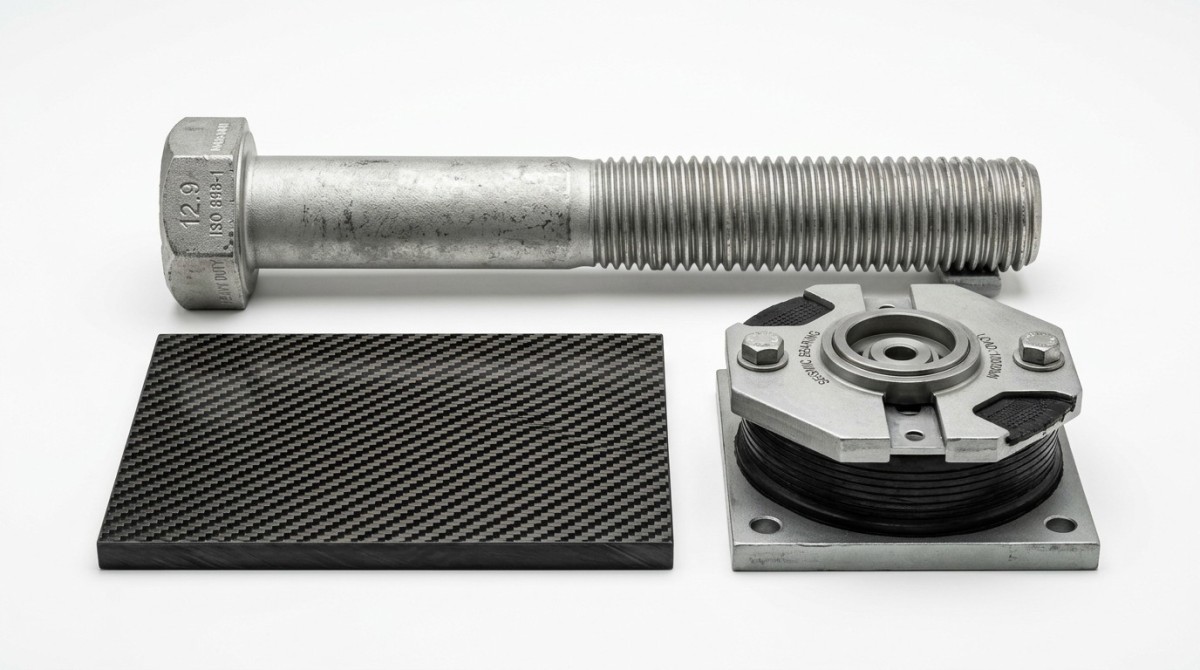
One of the primary risks involves the interaction between macro-structural frames and micro-component connectors. In large-scale bridge or skyscraper projects, the structural integrity is often evaluated at the beam-column level, yet the failure points frequently manifest in the specialized bolts and seismic isolation units. For instance, Grade 12.9 specialized bolts, while offering immense tensile strength of approximately 1220 MPa, can be susceptible to hydrogen embrittlement if the coating processes are not meticulously controlled. This technical nuance is often missed in standard inspections, leading to catastrophic brittle fractures under sudden stress loads.
Furthermore, the integration of multidisciplinary data—ranging from geotechnical stability to electromagnetic interference—is rarely centralized. This siloed approach creates blind spots in the "Integrity of Infrastructure." For a Chief Infrastructure Officer, the challenge lies in synthesizing these disparate metrics into a cohesive risk profile. As we move toward smarter cities, the benchmarking process must incorporate real-time sensor data that monitors structural health, allowing for predictive maintenance cycles of 5 to 10 years rather than reactive repairs after a major event occurs.
To mitigate these risks, decision-makers should implement a multi-tiered benchmarking protocol that goes beyond basic ISO compliance. This involves secondary verification of material properties, such as verifying the Charpy V-notch impact energy at low temperatures (e.g., -40°C) for steel components used in extreme climates. By establishing a more rigorous technical baseline, engineering conglomerates can bridge the critical gap between high-strength material fabrication and the long-term safety protocols required for the next generation of mega-structures.
Finally, the role of Flexible Expansion Joints in seismic mitigation cannot be overstated. Standard joints often fail to accommodate the complex three-dimensional movements during a seismic event, leading to structural pounding or deck collapse. Advanced isolation units, such as lead-rubber bearings (LRB) or high-damping rubber bearings (HDRB), provide the necessary displacement capacity—often up to ±600mm or more—to safeguard the superstructure. Understanding these specialized protection materials is the first step toward evolving traditional structural benchmarking into a modern safety asset.
Material Integrity: The Criticality of Fastener Quality Control
In the hierarchy of structural components, fasteners are often the smallest yet most critical elements. The distinction between aerospace-grade fastener trends and traditional construction fasteners is blurring as mega-structures demand higher precision and performance. Grade 12.9 bolts have become the standard for high-tension applications, but their high hardness necessitates a sophisticated quality control (QC) protocol. Hidden risks emerge when procurement directors prioritize cost over the traceability of the manufacturing process, potentially introducing sub-standard alloys into a mission-critical project.
Fastener quality control technology news highlights a shift toward automated ultrasonic testing (AUT) and eddy current inspections to detect internal flaws that are invisible to the naked eye. For project managers, the presence of a "Mill Test Report" is no longer sufficient. High-performance assets require third-party verification against MIL-SPEC or specific aerospace standards to ensure that every batch of Grade 12.9 bolts meets the required fatigue life of over 2 million cycles under 50% of ultimate tensile strength. This level of scrutiny is essential for structures subjected to high vibration or cyclical loading, such as high-speed rail pylons or wind turbine towers.
The following table illustrates the performance benchmarks for various high-strength fastening systems used in modern infrastructure projects. These parameters are vital for procurement directors when evaluating material suitability for extreme environments.
As shown in the data above, the selection of a fastener is not merely a matter of strength but a complex decision involving corrosion resistance and application-specific stressors. Sustainable fastener manufacturing news also points toward the reduction of hexavalent chromium in coatings, which is a critical consideration for projects following green building certifications like LEED or BREEAM. Ensuring that your supply chain adheres to these evolving environmental standards is a key component of modern project management.
Project managers must also stay vigilant regarding global supply chain alerts for steel. Fluctuations in raw material prices or trade tariffs can impact the lead time for specialized fasteners by as much as 12 to 24 weeks. Securing early commitments from manufacturers who utilize advanced ERP systems and maintain buffer stocks of high-strength alloys (such as 4140 or 4340 steel) is a strategic necessity to prevent project delays in the construction of mega-structures.
The Silent Threat: Electromagnetic Interference (EMI) in Modern Structures
While physical stability is the primary focus of most safety assessments, the integrity of the electronic assets housed within mega-structures is a growing concern. We live in an era of EMI saturation, where the proliferation of 5G networks, IoT sensors, and high-frequency power distribution can disrupt sensitive equipment. Extreme Shielding is no longer restricted to military bunkers or data centers; it is becoming a requirement for airports, hospitals, and smart high-rises. Hidden risks occur when the structural design fails to incorporate adequate Faraday cage principles or uses specialized protection materials that degrade over time.
Nano-layered EMI shielding gaskets and conductive sealants are now essential components of the building envelope. These materials must provide shielding effectiveness (SE) of at least 60dB to 80dB across a frequency range from 10 MHz to 40 GHz. If a structural engineer neglects the electromagnetic compatibility (EMC) of the building materials, the resulting interference can lead to sensor failure, communication blackouts, or even the malfunction of automated seismic isolation systems. This multidisciplinary risk requires a technical hub approach where structural and electronic engineers collaborate from the design phase.
The implementation of EMI protection often involves specialized reinforcement and repair materials that are conductive. For example, adding carbon-fiber-reinforced polymers (CFRP) with integrated metal meshes can serve the dual purpose of structural strengthening and electromagnetic shielding. However, the application of these materials requires precision; a gap as small as 2mm in a shielding gasket can allow significant RF leakage, compromising the entire system's integrity. Safety assessments must therefore include electromagnetic audits using specialized spectrum analyzers to ensure the "electronic durability" of the asset.
Moreover, the demand for century-long lifecycle durability extends to these shielding materials. Traditional gaskets can lose their conductivity due to oxidation or thermal cycling. Modern nano-materials are designed to resist environmental stressors for 25 to 50 years, significantly reducing the maintenance burden. Procurement directors should look for products tested against MIL-STD-285 or IEEE 299 standards to verify their long-term effectiveness. Investing in high-performance industrial sealing and adhesives at the outset can prevent costly retrofitting projects later in the structure's life.
Advanced Reinforcement: Leveraging CFRP and Seismic Isolation
In the realm of specialized reinforcement and repair materials, Carbon-Fiber Reinforced Polymer (CFRP) has emerged as a game-changer for extending the lifecycle of aging mega-structures. CFRP offers a strength-to-weight ratio that is 5 to 10 times higher than traditional steel reinforcement, making it ideal for seismic retrofitting. However, the hidden risk lies in the bonding process. The adhesive interface between the concrete substrate and the CFRP laminate is the most common point of failure. Without high-performance industrial sealing and adhesives that maintain their elasticity across a wide temperature range (-20°C to +60°C), the reinforcement can delaminate under stress.
Seismic isolation technology has also seen significant advancements. Flexible expansion joints and lead-rubber bearings are now engineered to handle not just lateral displacement, but also vertical acceleration and torsional forces. For project managers, the challenge is selecting the right isolation unit based on the specific resonance frequency of the structure. A mismatch between the isolator and the building's fundamental period can actually amplify seismic forces rather than dampen them. This highlights the need for rigorous technical benchmarking against international standards such as ISO 22762.
The following comparison table outlines the decision-making factors for structural reinforcement and isolation systems, providing a guide for engineering and procurement leads.
As the table indicates, while advanced materials like CFRP and LRBs offer superior durability, they require specific expertise during installation. Operators and maintenance personnel must be trained to recognize the early signs of adhesive failure or rubber degradation. Furthermore, the use of specialized reinforcement and repair materials often pays for itself by extending the maintenance interval from 15 years to over 30 years, significantly lowering the Total Cost of Ownership (TCO) for enterprise decision-makers.
Integrating these technologies into a new project or an existing asset requires a robust regulatory perspective. Engineering conglomerates must ensure that the materials used are not only high-performing but also meet the rigorous safety and shielding protocols defined by international governing bodies. This commitment to quality and technical precision is what ultimately ensures the integrity of the world's most critical infrastructure.
Frequently Asked Questions: Mega-Structure Safety & Material Selection
How do Grade 12.9 specialized bolts differ from standard high-tensile bolts?
Grade 12.9 bolts offer the highest level of tensile strength (1220 MPa) among standard alloy steel fasteners. Unlike Grade 8.8 or 10.9, they are precision-engineered for applications requiring maximum clamping force in compact designs. However, they require advanced surface treatments, such as Geomet or Dacromet, to prevent hydrogen embrittlement—a risk often overlooked in standard safety assessments. They are essential for seismic bracing and heavy machinery mounts in mega-structures.
What are the primary benefits of using CFRP for structural repair?
Carbon-Fiber Reinforced Polymer (CFRP) provides a non-corrosive, lightweight, and extremely high-strength solution for reinforcing concrete and steel. Its primary benefit is the ability to increase the load-bearing capacity of a structure without adding significant mass. This is particularly crucial for seismic retrofitting, where adding weight can increase the inertial forces acting on the building during an earthquake. It also offers a service life exceeding 50 years with minimal maintenance.
Why is EMI shielding becoming a priority for civil infrastructure?
With the rise of "smart" infrastructure, buildings are packed with sensitive electronics, sensors, and communication systems. Electromagnetic interference (EMI) from external sources or internal power systems can cause these systems to malfunction. Extreme Shielding materials, such as conductive gaskets and nano-layered sealants, protect these electronic assets from damage and ensure the reliable operation of critical systems like fire alarms, security networks, and automated building management systems (BMS).
Conclusion: Navigating the Future of Infrastructure Integrity
The safety of mega-structures is a multifaceted challenge that requires a move away from "check-box" compliance and toward a more nuanced, technically rigorous approach. By identifying hidden risks in seismic response, fastener quality, and electromagnetic interference, project managers can ensure that their assets are built to last a century or more. The integration of high-strength structural fastening systems, flexible expansion units, and advanced EMI shielding materials forms the foundation of modern infrastructure resilience. As global supply chains face increasing volatility, securing high-performance materials through trusted intelligence hubs like G-SCE becomes a strategic advantage for Top 500 engineering conglomerates.
We encourage structural engineers, procurement directors, and project managers to reassess their current safety protocols and material standards. Embracing the latest in fastener quality control technology news and sustainable manufacturing practices is not just a regulatory necessity but a commitment to the longevity and safety of our built environment. For those managing the world’s most critical assets, the path to integrity lies in the uncompromising application of advanced engineering standards and superior material technology.
Ready to enhance your project's structural integrity? Explore our comprehensive technical benchmarking repository or contact our team for a detailed consultation on specialized shielding and high-strength connector solutions. Let us help you bridge the gap between material fabrication and next-generation safety protocols.
Contact us today to receive a customized technical assessment or to learn more about our multidisciplinary B2B intelligence services.
- global supply chain alerts for steel
- fastener quality control technology news
- aerospace vs construction fastener trends
- sustainable fastener manufacturing news
- Extreme Shielding
- High-Strength Fastening
- Seismic Isolation
- EMI Shielding
- Infrastructure Integrity
- Structural Reinforcement
- Industrial Sealing
- Specialized Protection Materials
- Carbon-Fiber Reinforcement
- Structural Benchmarking
- Mega-Structure Safety
- Structural Fastening Systems
- Flexible Expansion Joints
- Critical Infrastructure
- Durability Standards
- Material Fabrication
- Structural Repair
- Shielding Protocols
Recommended News
Quarterly Executive Summaries Delivered Directly.
Join 50,000+ industry leaders who receive our proprietary market analysis and policy outlooks before they hit the public library.