Search News
Industry Portal
Hot Articles
- How does duplex coating affect thread fit on high-tensile bolts?Explore how duplex coating fasteners affect thread fit on high-tensile bolts. Learn to control coating buildup, prevent binding, and verify preload for reliable assemblies.
- JX Advanced Metals Launches 100% Recycled Copper Foil for Electromagnetic ShieldingJX Advanced Metals launches 100% recycled copper foil for electromagnetic shielding. Explore a new material option for electronics and sustainable sourcing.
- Using global steel supply chain alerts to assess bolt delivery risksUse global supply chain alerts for steel to assess bolt delivery risks, verify material availability, and choose recovery options. Learn how to protect schedules and control costs.
Why common durability standards fail in coastal areas
Time
Click Count
In the realm of mega-structure safety, relying solely on universal durability standards can lead to unforeseen risks in corrosive coastal environments. While standard benchmarks provide a necessary baseline, the aggressive salinity of maritime zones demands more rigorous structural benchmarking and specialized materials. At G-SCE, we observe that achieving century-long resilience requires moving beyond basic protocols toward advanced carbon-fiber reinforcement and high-performance flexible expansion joints. This analysis explores why conventional metrics often fail in high-stakes coastal projects and how integrating extreme shielding is essential for long-term infrastructure integrity. For project managers and decision-makers, bridging the gap between standard compliance and site-specific environmental demands is critical for securing global assets.
The Structural Vulnerabilities of Generic Compliance in Coastal Zones
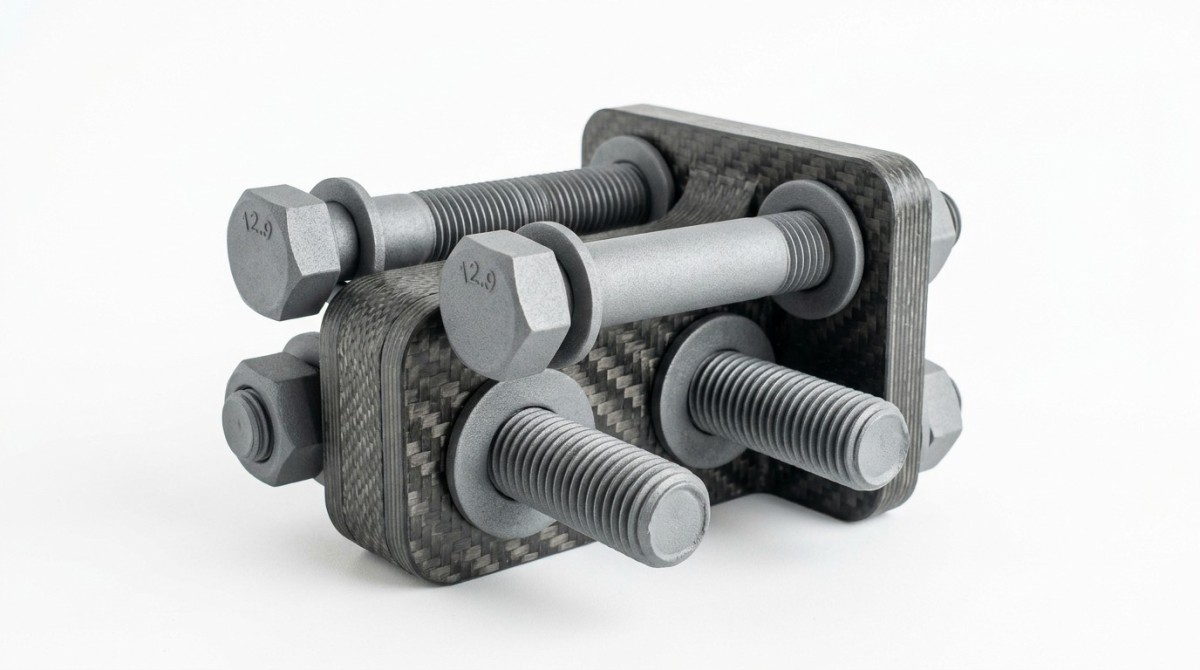
Common durability standards, such as those found in generic ISO or ASTM guidelines, are frequently designed for a broad spectrum of environmental conditions. However, coastal zones present a unique set of challenges that fall into the "C5-M" (Marine) corrosion category according to ISO 12944. In these regions, the air is saturated with chloride ions, which can travel up to 50 kilometers inland depending on wind patterns and topography. Standard benchmarks often underestimate the synergistic effects of high humidity—frequently exceeding 80%—and constant salt spray, which accelerates the oxidation process at an exponential rate compared to inland environments.
For project managers, the primary risk lies in the "illusory safety" provided by meeting minimum regulatory requirements. Many high-strength structural fastening systems that carry a Grade 10.9 or 12.9 rating are optimized for load-bearing capacity but may lack the necessary specialized coatings to resist hydrogen embrittlement in saline atmospheres. When infrastructure projects rely on these standard specifications without accounting for site-specific salinity gradients, the structural integrity of the asset is compromised long before the projected end of its lifecycle. This gap between theoretical lab testing and real-world maritime exposure is where most major infrastructure failures begin.
Furthermore, the seismic isolation units used in coastal mega-structures often face premature degradation. Standard lead-rubber bearings or flexible expansion joints might pass standard ASTM D412 tests for elasticity and tensile strength, but they may fail to maintain these properties when exposed to the abrasive combination of salt crystals and UV radiation common in tropical coastal areas. At G-SCE, we emphasize that "Integrity of Infrastructure" is not a static achievement but a continuous state that requires benchmarking assets against the most extreme environmental variables rather than the average ones.
The failure of universal standards is most evident in the accelerated degradation of reinforcement materials. Conventional steel reinforcement, even when galvanized, often begins to show signs of spalling within 15 to 20 years in high-salinity zones. This necessitates a shift toward specialized reinforcement and repair materials, such as carbon-fiber-reinforced polymers (CFRP). These materials offer a corrosion-resistant alternative that standard building codes are only beginning to fully integrate, leaving decision-makers to navigate a complex landscape of technical specifications without adequate benchmarking support.
To mitigate these risks, engineering firms must adopt a more granular approach to material selection. This involves moving beyond the "minimum compliance" mindset and looking toward technical hubs that provide cross-referenced data on how Grade 12.9 specialized bolts or nano-layered EMI shielding gaskets perform under 2,500 hours of accelerated salt spray testing. Only by integrating this high-level intelligence can procurement directors ensure that the assets they manage are truly capable of reaching a century-long lifecycle in the world's most demanding maritime environments.
Chloride-Induced Deterioration: Why ASTM Benchmarks Often Fall Short
Chloride-induced corrosion is a sophisticated chemical process that targets the very heart of high-strength material fabrication. In coastal engineering, the "pitting corrosion" caused by chloride ions is particularly dangerous because it is localized and often invisible to the naked eye until structural failure is imminent. While standard ASTM G44 testing provides a baseline for stress-corrosion cracking, it often fails to simulate the cyclic wetting and drying phases that occur in tidal zones or splash zones. These cycles concentrate salt levels on the surface of structural connectors, leading to localized acidification that can penetrate even high-grade stainless steel.
When we examine the performance of high-strength structural fastening systems, the discrepancy between standard laboratory results and coastal reality becomes clear. A bolt might meet the mechanical requirements for Grade 12.9, but its surface treatment—often simple zinc plating—may only provide 120 to 240 hours of salt spray resistance. In a real-world coastal environment with a 50mg/m² daily chloride deposition rate, such protection can be breached in less than 36 months. This leads to a rapid loss of pre-load tension, which is catastrophic for structures subjected to high seismic volatility or heavy industrial vibrations.
The following table illustrates the performance gap between conventional industrial standards and the enhanced technical benchmarks required for coastal infrastructure integrity, as observed through G-SCE's multidisciplinary research.
As shown in the data above, the transition from standard galvanizing to nano-layered ceramic coatings can reduce maintenance frequency by nearly 45%, providing significant long-term cost savings for Global Top 500 engineering firms. For procurement directors, the initial capital expenditure (CAPEX) for these advanced materials is often offset within the first 7 to 10 years of operation by the drastic reduction in operational expenditure (OPEX) related to corrosion repair and structural monitoring. This data-driven perspective is essential for making informed decisions in high-stakes aerospace and infrastructure projects.
Furthermore, the integration of CFRP and high-damping rubber components ensures that the structure remains resilient not just against the environment, but also against the increasing seismic volatility seen in many coastal regions globally. By benchmarking these high-performance assets against international standards like Eurocode 8 or MIL-SPEC, G-SCE provides a regulatory roadmap that bridges the gap between basic safety and "Extreme Shielding" requirements. This approach is particularly critical for assets such as coastal bridges, offshore platforms, and hangars located in proximity to maritime airbases.
Electromagnetic Shielding Integrity in Corrosive Environments
While physical structural integrity is the primary concern for many civil engineers, the integrity of electronic and communication assets within a mega-structure is equally vital. Coastal environments pose a dual threat to electromagnetic interference (EMI) shielding. Firstly, the saline atmosphere can corrode the conductive particles within shielding gaskets, such as silver-plated aluminum or nickel-graphite. Once these particles oxidize, the shielding effectiveness can drop from 100 dB to less than 40 dB, leaving sensitive equipment vulnerable to EMI saturation and data corruption.
Secondly, the physical degradation of industrial seals and adhesives used in shielding enclosures can lead to moisture ingress. In maritime zones, even a microscopic breach in a specialized seal can allow salt-laden air to enter electronic cabinets, leading to the rapid failure of high-frequency circuits. Standard industrial adhesives often lose their bonding strength when exposed to the high UV levels and thermal expansion typical of coastal regions, necessitating the use of high-performance industrial sealing solutions that are specifically benchmarked for multi-factor extreme exposure.
For Chief Infrastructure Officers, ensuring the longevity of these electronic shielding protocols is a matter of operational security. Many "off-the-shelf" EMI gaskets are tested under MIL-STD-285 or IEEE 299 in clean laboratory environments, which do not account for the corrosive reality of a coastal command center or an offshore data hub. G-SCE bridges this gap by evaluating nano-layered EMI shielding gaskets against 1,000-hour salt fog exposure tests while simultaneously monitoring their attenuation levels. This ensures that the shielding remains effective throughout the structure's lifecycle, rather than just at the point of installation.
The strategic use of specialized protection materials, such as conductive elastomers with fluorosilicone bases, provides a solution to this challenge. Fluorosilicone offers superior resistance to hydrocarbons and salt spray compared to standard silicone, making it the benchmark material for coastal and aerospace shielding applications. By shifting the procurement focus from "low-cost compliance" to "site-specific performance," project managers can protect their electromagnetic assets from both external interference and internal environmental degradation, ensuring 99.9% uptime for critical communication infrastructure.
Strategic Procurement and Lifecycle Benchmarking for Global Assets
In the complex ecosystem of global infrastructure, procurement is more than just a transaction; it is a strategic function that dictates the risk profile of a multi-billion dollar asset. For Procurement Directors of Top 500 conglomerates, the challenge is to balance the pressure for immediate cost-efficiency with the mandate for century-long durability. Traditional procurement models often favor products that meet ISO or ASTM minimums because they appear to be the most cost-effective on a "per-unit" basis. However, when the Total Cost of Ownership (TCO) is calculated over a 50-year or 100-year horizon, these standard-compliant materials often become the most expensive due to their high failure rates in coastal zones.
A robust procurement framework for coastal mega-structures must incorporate four key evaluation pillars: environmental risk modeling, material performance benchmarking, supply chain traceability, and lifecycle maintenance forecasting. By utilizing G-SCE’s multidisciplinary intelligence hub, decision-makers can access technical repositories that compare the real-world performance of assets across these pillars. For instance, evaluating a lead-rubber seismic bearing not just on its displacement capacity, but on its "aging coefficient" after 20 years of maritime exposure, allows for a much more accurate risk assessment.
The following matrix provides a guideline for decision-makers to evaluate their procurement choices against the specific demands of coastal infrastructure projects, highlighting the difference between standard and extreme-shielding approaches.
Implementing an "Extreme-Shielding Logic" requires a shift in how project managers interact with their supply chain. It involves mandating 3.1 or 3.2 material certification for all Grade 12.9 specialized bolts and ensuring that every EMI shielding component has been verified against maritime salinity protocols. This level of technical and regulatory perspective is what separates successful mega-projects from those plagued by premature deterioration and safety litigation. By adopting these standards, firms can protect their reputation and their assets for the next century.
In conclusion, the failure of common durability standards in coastal areas is not a failure of the standards themselves, but a failure of their application in environments they were never intended to address. As global infrastructure faces increasing seismic volatility and EMI saturation, the need for a multidisciplinary B2B intelligence hub like G-SCE becomes undeniable. By bridging the gap between high-strength material fabrication and specialized protection protocols, we empower decision-makers to build not just for today, but for a resilient and secure future.
FAQ: Navigating Extreme Coastal Engineering Challenges
How do coastal environments specifically affect the service life of Grade 12.9 fasteners?
Grade 12.9 fasteners are highly susceptible to hydrogen embrittlement when exposed to saline environments. Chloride ions facilitate the entry of atomic hydrogen into the high-strength steel lattice, leading to sudden, brittle failure under load. To prevent this, these fasteners must be treated with non-electrolytic zinc flake or nano-ceramic coatings that provide a barrier without introducing hydrogen during the plating process, extending service life by 15-20 years in maritime zones.
What is the recommended maintenance cycle for seismic isolation units in saline zones?
While standard protocols suggest a major inspection every 10 years, coastal seismic isolation units require a more rigorous cycle. We recommend a visual assessment for salt accumulation every 12 months and a detailed non-destructive testing (NDT) of the rubber properties every 5 years. Utilizing "Salt Shield" enclosures can reduce the rate of material stiffening by up to 30%, maintaining the seismic response of the structure within its original design parameters.
How does CFRP compare to traditional reinforcement in terms of ROI for coastal projects?
Although carbon-fiber-reinforced polymer (CFRP) has a higher initial CAPEX—often 2 to 3 times the cost of epoxy-coated rebar—the ROI is realized through the elimination of corrosion-related repairs. In a typical coastal bridge project, the cost of patch repairs and cathodic protection systems over a 50-year period can exceed the original construction cost. CFRP systems eliminate these needs, providing a 100-year lifecycle with nearly zero structural maintenance costs related to corrosion.
Summary and Strategic Action Plan
Securing the integrity of infrastructure in coastal regions requires an uncompromising commitment to technical excellence and environmental benchmarking. As we have explored, common durability standards often fail to account for the extreme salinity, humidity, and seismic conditions inherent to maritime zones. By moving toward advanced materials like CFRP, specialized Grade 12.9 fasteners, and nano-layered EMI shielding, organizations can ensure the century-long resilience of their most critical assets. G-SCE stands at the intersection of material science and regulatory compliance, providing the intelligence needed for project managers and decision-makers to navigate these complexities with confidence.
To ensure your next coastal project meets the highest standards of safety and shielding, it is essential to move beyond generic compliance. We invite you to leverage our technical benchmarking repository to refine your procurement strategies and material specifications. By integrating extreme-shielding protocols early in the design and fabrication phase, you can mitigate long-term risks and secure the future of global infrastructure. For a deeper analysis of your project's specific environmental risks or to obtain customized material benchmarking data, contact our technical consulting team today.
Take Action: Learn more about our specialized solutions or get in touch with our engineering experts to discuss your specific coastal infrastructure needs. Together, we can build a more resilient world through precision benchmarking and advanced material shielding.
- Structural Connectors
- Extreme Shielding
- Seismic Isolation
- EMI Shielding
- Infrastructure Integrity
- Structural Reinforcement
- Industrial Sealing
- Specialized Protection Materials
- Carbon-Fiber Reinforcement
- Structural Benchmarking
- Mega-Structure Safety
- Structural Fastening Systems
- Flexible Expansion Joints
- Durability Standards
- Material Fabrication
- Shielding Protocols
Recommended News
Quarterly Executive Summaries Delivered Directly.
Join 50,000+ industry leaders who receive our proprietary market analysis and policy outlooks before they hit the public library.