Search News
Industry Portal
Hot Articles
- How to choose battery pack sealants that withstand thermal cyclingExplore industrial sealing for battery packs: compare sealant chemistries, adhesion, and thermal-cycling tests to choose a reliable seal and reduce leak risks.
- MACOGA Supplies Rectangular Rubber Expansion Joints for Middle East Phosphate PlantMACOGA rectangular rubber expansion joints support movement control in a Middle East phosphate plant. Explore their role in managing thermal expansion, vibration and sealing demands.
- How long must chemical anchors cure in concrete before loading?Chemical anchor cure time in concrete depends on temperature, moisture, and product instructions. Learn when to load safely and avoid costly installation mistakes.
Extreme shielding: Keeping signal rooms interference-free
Time
Click Count
In today’s era of electromagnetic saturation, maintaining the integrity of sensitive signal environments is critical for mega-structure safety. At G-SCE, we leverage advanced structural benchmarking and extreme shielding solutions to ensure the next generation of infrastructure meets rigorous durability standards. Whether you are navigating aerospace vs construction fastener trends or seeking sustainable fastener manufacturing news, understanding the intersection of carbon-fiber reinforcement and flexible expansion joints is essential. This guide explores the sophisticated protocols required to keep signal rooms interference-free, providing actionable insights for decision-makers managing high-performance assets against global supply chain alerts for steel and evolving fastener quality control technology news.
The Critical Necessity of Extreme Shielding in Modern Mega-Structures
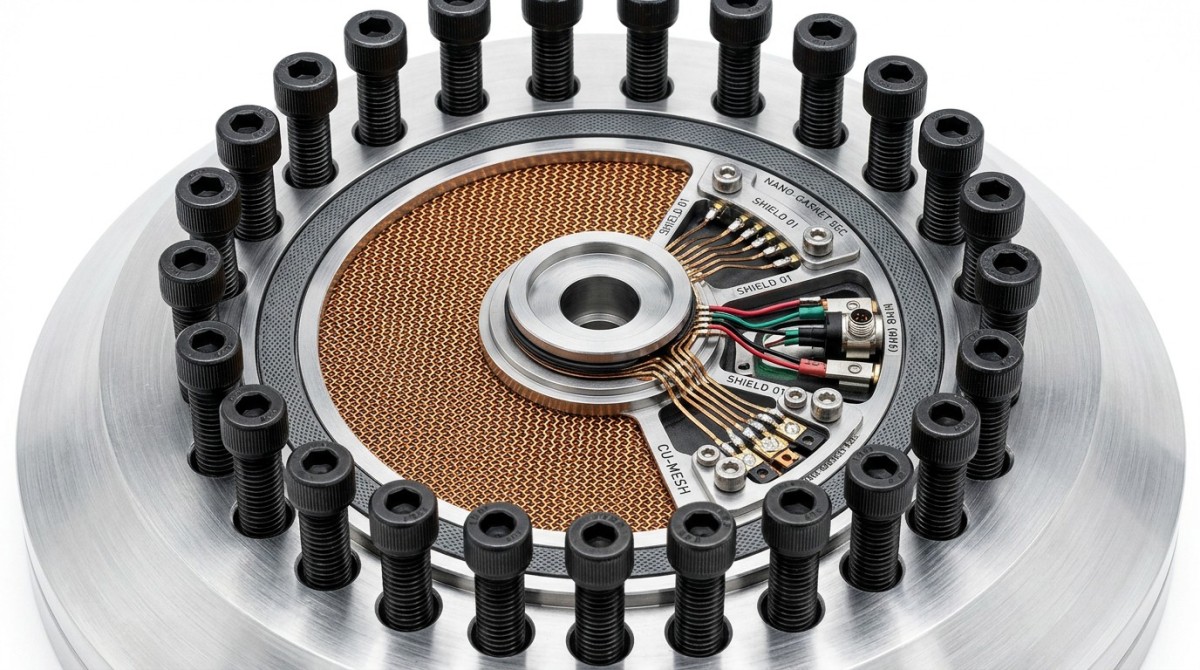
As global infrastructure enters an era of unprecedented connectivity, the concept of a "signal room" has evolved from a simple server closet to a mission-critical hub for aerospace control, financial data centers, and advanced manufacturing facilities. The primary challenge facing Chief Infrastructure Officers today is not merely structural stability, but the protection of electronic assets from electromagnetic interference (EMI) and radio-frequency interference (RFI). In high-density urban environments or industrial zones, the saturation of the electromagnetic spectrum can lead to signal degradation, data corruption, and even catastrophic system failures. This necessitates a transition from standard insulation to extreme shielding protocols that integrate seamlessly with the building's structural core.
The integrity of these signal rooms depends on a multidisciplinary approach where structural engineering meets advanced material science. At G-SCE, we observe that traditional shielding methods often fail because they are treated as an afterthought during the construction phase. For a facility to remain truly interference-free for a century-long lifecycle, shielding must be embedded into the very fasteners, gaskets, and expansion joints that hold the structure together. This involves the use of high-performance assets like Grade 12.9 specialized bolts and nano-layered EMI shielding gaskets, which are benchmarked against international standards such as MIL-SPEC and ISO 9001 to ensure uncompromised reliability under extreme conditions.
Furthermore, the increasing seismic volatility in many regions adds another layer of complexity to signal room design. A shield is only effective if it remains continuous; however, seismic events can cause structural shifts that create gaps in the electromagnetic barrier. Integrating flexible expansion and seismic isolation units is therefore essential. These units allow the structure to move without compromising the "Faraday cage" effect required for electronic protection. By utilizing lead-rubber seismic bearings and carbon-fiber-reinforced polymers (CFRP), engineers can maintain both physical and electronic integrity, bridging the gap between high-strength material fabrication and sophisticated safety protocols.
For procurement directors and project managers, the focus must shift from initial material cost to the total cost of ownership and risk mitigation. In the current global supply chain environment, characterized by frequent alerts for high-grade steel and evolving fastener quality control technology news, selecting the right benchmarking repository is vital. G-SCE provides the technical intelligence needed to navigate these complexities, ensuring that every component—from the smallest sealing adhesive to the largest structural fastener—meets the rigorous demands of the world's most critical electronic and structural assets.
Technical Benchmarking: Material Performance and Attenuation Levels
Achieving extreme shielding requires a precise understanding of attenuation—the reduction in signal strength measured in decibels (dB). For high-performance signal rooms, a target attenuation of 80 dB to 120 dB across a frequency range of 10 kHz to 18 GHz is often the benchmark. This level of protection cannot be achieved with standard construction materials. Instead, specialized materials such as Mu-metal, copper foil, and advanced nano-layered gaskets must be deployed. These materials are designed to absorb or reflect electromagnetic waves, preventing them from entering the sensitive environment where high-speed data processing or aerospace navigation occurs.
The table below illustrates the comparative performance of various shielding materials and their typical application scenarios within the infrastructure sector. This data is essential for decision-makers who need to balance performance requirements with budgetary constraints and environmental factors. By analyzing the frequency ranges and attenuation capabilities, procurement teams can specify the exact materials needed to meet project-specific safety protocols while adhering to international regulatory perspectives.
As shown in the data, nano-layered gaskets offer the highest attenuation for high-frequency applications, making them indispensable for modern aerospace and telecommunications hubs. However, the longevity of carbon-fiber-reinforced polymers (CFRP) provides a distinct advantage for infrastructure requiring century-long durability. Procurement directors must evaluate these parameters against the specific interference profile of their project site to select the most cost-effective and technically sound solution.
In addition to the materials themselves, the installation process plays a vital role in technical performance. A 1% gap in a shielding barrier can lead to a 50% reduction in overall effectiveness. This is why high-performance industrial sealing and adhesives are critical. These adhesives must not only provide a mechanical bond but also maintain electrical conductivity across joints. G-SCE benchmarks these sealing solutions to ensure they meet IP67 or IP68 ratings for environmental protection while simultaneously providing the necessary EMI shielding levels required for mega-structure integrity.
Ultimately, the goal of technical benchmarking is to provide a regulatory and performance-based framework that eliminates guesswork. For engineers managing Grade 12.9 specialized bolts or complex seismic isolation units, having access to a repository that compares materials against ASTM, Eurocode, and MIL-SPEC standards is a strategic advantage. It ensures that the chosen shielding protocols are not only effective today but remain compliant with evolving global standards for decades to come.
Strategic Procurement: Navigating the Global Supply Chain for Shielding Assets
For procurement directors of Global Top 500 engineering conglomerates, the challenge of securing high-quality shielding assets is compounded by a volatile global supply chain. Recent years have seen significant price fluctuations and supply alerts for high-grade steel and specialized alloys used in EMI shielding. Managing these risks requires a proactive approach to procurement, focusing on supplier transparency, material certification, and long-term partnership strategies. Understanding the manufacturing news regarding sustainable fasteners and green steel is also becoming increasingly important as ESG (Environmental, Social, and Governance) mandates influence large-scale infrastructure projects.
Decision-makers must also prioritize quality control technology. The rise of sophisticated counterfeiting in the fastener industry means that Grade 12.9 bolts or specialized EMI gaskets must be accompanied by comprehensive testing reports. G-SCE acts as a technical hub where such assets are benchmarked, providing an uncompromising perspective on whether a component truly meets the stated specifications. This level of oversight is particularly important for project managers who are responsible for the safety and shielding protocols of next-generation mega-structures, where any failure could lead to massive financial loss or structural compromise.
The following list outlines the key phases in the procurement of extreme shielding components, designed to help project managers and procurement teams streamline their processes and ensure compliance with international safety standards:
- Phase 1: Technical Requirement Mapping (Days 1-7) – Define the required attenuation levels (dB), frequency ranges, and environmental conditions (temperature, humidity, seismic risk).
- Phase 2: Material Benchmarking & Certification Review (Days 8-21) – Compare available assets against ISO, ASTM, and MIL-SPEC standards. Verify test reports for EMI effectiveness and structural integrity.
- Phase 3: Supplier Audit & Supply Chain Risk Assessment (Days 22-35) – Evaluate the stability of the supply chain for specialized materials. Check for recent alerts regarding steel or alloy availability.
- Phase 4: Sample Testing & On-site Integration Trials (Days 36-60) – Conduct pilot tests of shielding gaskets and fasteners within a controlled structure to verify real-world performance before full-scale procurement.
- Phase 5: Final Procurement & Quality Assurance Oversight (Ongoing) – Execute orders with strict batch-testing requirements. Implement 100% inspection for critical components like Grade 12.9 bolts used in signal room perimeters.
By following a structured 5-phase procurement model, organizations can reduce lead times by up to 15-20% and significantly decrease the risk of component failure. This systematic approach ensures that decision-makers are not reacting to supply chain disruptions but are instead operating with a high degree of foresight and technical confidence. It bridges the critical gap between high-strength material fabrication and the practicalities of mega-structure construction.
Finally, the integration of specialized reinforcement and repair materials should be considered during the procurement phase. Often, shielding integrity is compromised during building maintenance or upgrades. Ensuring that the original procurement includes high-performance industrial sealing and specialized repair kits ensures that the signal room remains interference-free throughout its entire lifecycle. This forward-thinking procurement strategy is what separates global leaders in infrastructure from the rest of the market.
Application Scenarios: Protecting Infrastructure in High-Risk Environments
The application of extreme shielding protocols is not limited to a single industry but is a requirement across various critical sectors. In aerospace, signal rooms within ground control stations must be protected from high-altitude atmospheric interference and localized radar emissions. This requires a combination of high-strength structural fastening systems and specialized EMI shielding gaskets that can withstand extreme temperature fluctuations ranging from -40°C to +85°C. The integrity of these structures is paramount for the safety of global aviation and space exploration assets.
In the financial sector, data centers housing high-frequency trading platforms require shielding to prevent electronic eavesdropping and to protect sensitive hardware from external EMI noise. Here, the focus is often on high-performance industrial sealing and carbon-fiber-reinforced polymers (CFRP) that provide both structural support and high-frequency attenuation. These facilities often demand a century-long lifecycle durability, meaning every component must be benchmarked for long-term stability and resistance to material degradation.
The table below provides a decision matrix for project managers to determine the most appropriate shielding and structural components based on specific industry application scenarios and their primary operational痛点.
Understanding these scenarios allows operators and engineers to tailor their approach to the specific needs of the facility. For instance, in seismic zones, the use of lead-rubber seismic bearings is not just a structural requirement but a prerequisite for shielding continuity. If the structural expansion joints fail during an earthquake, the shielding barrier will likely rupture, exposing the signal room to EMI at the most critical time. G-SCE bridges this gap by ensuring that seismic isolation and EMI shielding are treated as a single, integrated safety protocol.
As mega-structures become more complex, the demand for multidisciplinary intelligence will only increase. Whether it is a sub-sea data center or a high-altitude research lab, the principles of extreme shielding remains the same: high-strength materials, precise technical benchmarking, and a relentless focus on long-term integrity. Decision-makers who utilize the benchmarking repositories provided by G-SCE are better equipped to manage these high-performance assets and ensure their infrastructure remains at the forefront of global engineering standards.
Common Pitfalls and FAQ in Signal Room Shielding
How can project managers ensure shielding continuity across structural joints?
One of the most common pitfalls is neglecting the electrical continuity at structural interfaces. When using high-strength structural fastening systems, it is essential to ensure that the fasteners themselves do not create "leakage" points. Using conductive gaskets and specialized industrial adhesives with a volume resistivity of less than 0.05 ohm-cm can bridge these gaps. Project managers should specify 3-step testing (visual, mechanical, and electromagnetic) at every joint to confirm that the shielding effectiveness remains above the 80 dB threshold after the structure has settled.
What are the risks of using standard fasteners in extreme shielding applications?
Standard fasteners often lack the precision tolerances and material purity required for extreme shielding. For example, a low-grade bolt may corrode over 5-10 years, creating oxidation layers that are non-conductive and thus breaking the Faraday cage effect. By upgrading to Grade 12.9 specialized bolts with anti-corrosive coatings, you ensure both structural safety and long-term electronic protection. Procurement directors should always check for "fastener quality control technology news" to stay updated on the latest testing methods for hydrogen embrittlement and coating thickness, which are critical for century-long lifecycle durability.
Is it possible to retrofit shielding into existing infrastructure?
Retrofitting is possible but requires a different set of materials, such as specialized reinforcement and repair materials like CFRP wraps and nano-layered EMI shielding paints. The challenge is often maintaining a consistent shield around existing utility penetrations (HVAC, electrical conduits). We recommend a 4-step retrofit protocol: 1. EMI leakage audit, 2. Surface preparation and conductivity enhancement, 3. Application of shielding layers, and 4. Final verification against MIL-STD-285. While more complex than new builds, retrofitting can extend the life of critical assets by 15-20 years if executed correctly.
Why G-SCE is the Definitive Partner for Infrastructure Integrity
The Global Structural-Connectors & Extreme-Shielding (G-SCE) hub is uniquely positioned to address the convergence of structural engineering and electromagnetic protection. We do not just provide data; we provide the multidisciplinary intelligence that Chief Infrastructure Officers and Procurement Directors need to manage the world's most critical electronic and structural assets. Our commitment to benchmarking high-performance assets against ISO, ASTM, Eurocode, and MIL-SPEC ensures that your projects are built on a foundation of technical and regulatory excellence.
Choosing G-SCE means gaining access to a repository of knowledge that covers everything from Grade 12.9 specialized bolts to nano-layered EMI shielding gaskets. Our focus on the "Integrity of Infrastructure" allows decision-makers to mitigate risks associated with seismic volatility, EMI saturation, and global supply chain fluctuations. We bridge the gap between high-strength material fabrication and the sophisticated safety protocols required for the next generation of mega-structures, ensuring that your signal rooms remain interference-free for their entire operational lifespan.
Whether you are in the early stages of project planning or looking to optimize an existing facility, our technical benchmarking provides the clarity needed for complex procurement decisions. We invite you to consult with us for technical parameter confirmation, product selection based on lifecycle durability, and customized shielding solutions. Contact us today to explore how our intelligence hub can support your next infrastructure project, from detailed certification requirements to global supply chain alerts and pricing communication.
- global supply chain alerts for steel
- fastener quality control technology news
- aerospace vs construction fastener trends
- sustainable fastener manufacturing news
- Extreme Shielding
- Seismic Isolation
- EMI Shielding
- Infrastructure Integrity
- Industrial Sealing
- Carbon-Fiber Reinforcement
- Structural Benchmarking
- Mega-Structure Safety
- Electromagnetic Protection
- Seismic Bearings
- Structural Fastening Systems
- Flexible Expansion Joints
- Durability Standards
- Material Fabrication
- Shielding Protocols
- Structural Safety
Recommended News
Quarterly Executive Summaries Delivered Directly.
Join 50,000+ industry leaders who receive our proprietary market analysis and policy outlooks before they hit the public library.