Search News
Industry Portal
Hot Articles
- China Customs Expands Spot Checks for Structural Epoxy ExportsStructural Epoxy exports face stricter China customs spot checks from June 1, 2026. Learn required MSDS, heavy metals, and strength test documents to avoid delays and suspension.
- U.S. Preliminary Ruling Puts 82.37% Subsidy Rate on CIMC Trailer FirmsU.S. preliminary ruling sets an 82.37% subsidy rate on CIMC trailer firms, signaling tighter review of semi-trailer components, suppliers, and export compliance. See the key risks.
- EU REACH Tightens Phthalate Rules for Shielding FoilsEU REACH tightens phthalate rules for shielding foils with a 0.1% limit on DEHP, BBP, and DBP. Learn the Dec 1, 2026 compliance deadline, document requirements, and export risks.
Global supply chain alerts for steel: 2026 delivery risks
Time
Click Count
As the industry braces for 2026, global supply chain alerts for steel are reaching a critical threshold, threatening the timelines of critical infrastructure worldwide. For decision-makers relying on rigorous Structural Benchmarking and Durability Standards, understanding these delivery risks is paramount to ensuring Mega-Structure Safety. At G-SCE, we analyze how sustainable fastener manufacturing news and shifting aerospace vs construction fastener trends impact the procurement of high-performance assets. From Flexible Expansion Joints to Carbon-Fiber Reinforcement and Extreme Shielding solutions, staying ahead of fastener quality control technology news is essential. This report provides the technical insights needed to navigate upcoming volatility and maintain the integrity of the world’s most critical structural assets.
Navigating the 2026 Steel Supply Chain Landscape
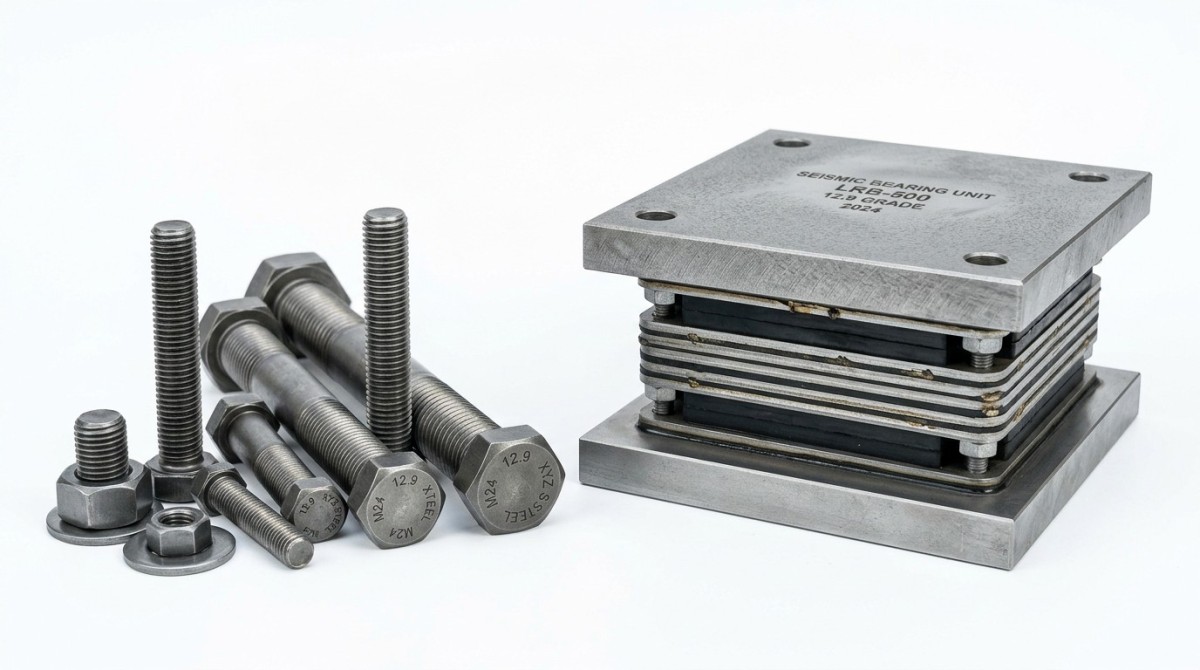
The global steel market is currently undergoing a structural transformation that will reach a critical inflection point by early 2026. This shift is driven by a convergence of decarbonization mandates, geopolitical realignments, and a fundamental shortage of high-purity iron ore required for specialized alloys. For project managers overseeing mega-structures, these "Global supply chain alerts for steel" are not merely speculative; they represent a tangible threat to delivery schedules for Grade 12.9 specialized bolts and seismic isolation units. The transition toward "Green Steel" production, while environmentally necessary, has temporarily reduced the aggregate capacity of traditional blast furnaces, creating a bottleneck for high-strength material fabrication that could last for 18–24 months.
As we analyze the 2026 delivery risks, it becomes evident that the aerospace vs construction fastener trends are beginning to overlap, creating intense competition for the same high-performance raw materials. Aerospace conglomerates are securing long-term contracts for titanium and high-grade stainless steel, often at the expense of infrastructure-scale procurement. This competition necessitates a more sophisticated approach to procurement, where technical benchmarking and early-stage engagement with B2B intelligence hubs like G-SCE become critical. Decision-makers must look beyond price points and evaluate the long-term lifecycle durability of structural connectors to avoid the pitfalls of inferior material substitutions that often flood the market during supply crunches.
Furthermore, the logistics of transporting large-scale structural components—such as lead-rubber seismic bearings and flexible expansion joints—are becoming increasingly complex. Port congestion and shifting maritime routes are expected to add a volatility factor of ±15% to standard delivery windows in 2026. This logistical unpredictability requires procurement directors to implement more robust inventory strategies, moving away from "just-in-time" models toward a more resilient "just-in-case" framework. By establishing a 5–10% contingency buffer in material procurement, firms can shield their projects from the most severe impacts of sudden supply chain disruptions or sudden regulatory changes in export markets.
In this environment, fastener quality control technology news is gaining prominence as a leading indicator of supply chain health. When manufacturers face pressure to meet aggressive delivery targets, the risk of non-conformance with ISO, ASTM, and Eurocode standards increases significantly. G-SCE’s role as a technical benchmarking repository is to provide the uncompromising regulatory perspective needed to verify that the Grade 12.9 bolts or CFRP materials arriving on-site actually meet the specified MIL-SPEC or civil engineering requirements. Maintaining structural integrity requires a vigilant eye on both the macroeconomic trends and the microscopic details of material fabrication during this volatile period.
Technical Benchmarking for Infrastructure Resilience
The "Integrity of Infrastructure" is fundamentally dependent on the benchmarking of high-performance assets against rigorous international standards. In 2026, the focus on structural benchmarking will shift toward multi-disciplinary protection, where seismic isolation must be balanced with electromagnetic interference (EMI) saturation protocols. For Chief Infrastructure Officers, the challenge lies in selecting components that offer century-long lifecycle durability while meeting modern safety requirements. This involves a deep dive into the technical specifications of nano-layered EMI shielding gaskets and carbon-fiber-reinforced polymers (CFRP) that are becoming standard in next-generation mega-structures.
Specialized reinforcement and repair materials are also seeing a surge in demand as aging infrastructure requires critical upgrades to meet 2026 safety standards. High-performance industrial sealing and adhesives are no longer secondary considerations; they are primary barriers against environmental degradation and chemical ingress. By utilizing technical benchmarking data, engineers can determine the optimal balance between high-strength structural fastening systems and flexible expansion units. This holistic view ensures that every component—from the smallest specialized bolt to the largest seismic bearing—works in harmony to protect the asset against both natural and man-made threats.
At G-SCE, we emphasize the importance of understanding the mechanical properties of Grade 12.9 specialized bolts, which possess a minimum tensile strength of 1200 MPa. These components are the backbone of high-strength fastening, yet their performance can be compromised by hydrogen embrittlement or improper coating applications if quality control is bypassed during supply shortages. Our benchmarking reports provide project managers with the specific data points needed to verify batch consistency and compliance with Eurocode 3 or ASTM A325/A490 standards. This level of technical scrutiny is the only way to ensure that the infrastructure being built today remains safe and functional for the next century.
Core Pillars of Structural Integrity in 2026
- High-Strength Fastening: Evaluating the fatigue resistance and torque-tension relationships of Grade 10.9 and 12.9 systems under seismic loads.
- Seismic Isolation: Benchmarking lead-rubber bearings (LRB) and friction pendulum systems against ISO 22762 requirements for nuclear and bridge applications.
- Shielding Protocols: Integrating MIL-STD-188-125 compliant EMI shielding with structural gaskets to protect sensitive electronic infrastructure.
- Durability Adhesives: Selecting high-performance sealants with an operational temperature range of -40°C to +120°C for extreme environment protection.
Procurement Strategies and Risk Mitigation
Developing a resilient procurement strategy for 2026 requires a departure from traditional vendor-client relationships toward strategic technical partnerships. Procurement Directors must move beyond simple RFPs and incorporate detailed "technical and regulatory perspectives" into their sourcing criteria. This means auditing suppliers not just on their current output, but on their access to raw material pipelines and their adherence to sustainable fastener manufacturing news. By diversifying the supply base across multiple geographic regions, organizations can mitigate the risk of localized delivery delays or trade-related disruptions that are expected to characterize the upcoming year.
The following table outlines the anticipated risk levels and mitigation strategies for key structural components as we move toward 2026. This data is based on current market intelligence and historical lead-time volatility observed across the five industrial pillars of G-SCE.
The data presented above indicates that specialized fasteners and high-performance reinforcement materials are most susceptible to delivery risks in 2026. This necessitates a procurement window that starts at least 6 months prior to the required on-site date. Decision-makers should prioritize vendors who can provide real-time tracking of material batches and those who allow for independent third-party testing at the manufacturing source. By verifying quality at the 3-phase inspection point—raw material, post-fabrication, and pre-shipment—project managers can significantly reduce the likelihood of costly project delays or structural failures in the field.
Cost management in 2026 will also hinge on the ability to benchmark alternative materials without compromising safety. While the initial procurement cost of carbon-fiber-reinforced polymers (CFRP) might be higher than traditional steel reinforcement, the total lifecycle cost is often lower due to its corrosion resistance and reduced maintenance requirements over a 100-year lifecycle. G-SCE assists procurement teams in performing these comparative analyses, ensuring that the "Integrity of Infrastructure" is maintained within budget constraints while addressing the reality of 2026 steel delivery risks.
Compliance Standards and Certification Frameworks
In the complex regulatory environment of 2026, compliance is not just about meeting a single standard; it is about achieving a harmony between various international and industry-specific certifications. Whether it is ISO 9001 for quality management, ASTM for material testing, or Eurocode for structural design, each standard plays a vital role in the safety and shielding of mega-structures. For engineers working on aerospace or critical electronic assets, MIL-SPEC requirements add another layer of complexity, particularly when sourcing electromagnetic shielding and specialized protection materials. Understanding these nuances is essential for avoiding regulatory non-compliance during project audits.
The certification framework for structural connectors is becoming increasingly stringent as seismic volatility rises. New amendments to Eurocode 8 and ASTM E2126 are expected to be fully implemented by 2026, requiring more rigorous testing of flexible expansion joints and seismic isolation units. These standards demand that components undergo dynamic testing at specific frequencies and load thresholds, often requiring facilities that are currently in high demand. Project managers must ensure that their suppliers have secured testing slots well in advance to avoid a certification bottleneck that could delay the entire supply chain.
The data above highlights the specific testing protocols that will be mandatory for infrastructure projects by 2026. For example, the requirement for dynamic shear testing at 0.5–1.5Hz for seismic isolation units is a direct response to the increased seismic activity recorded globally. Similarly, the demand for 100dB shielding effectiveness in EMI protocols reflects the saturation of electromagnetic interference in modern urban environments. G-SCE provides the benchmarking data necessary to ensure that components selected during the procurement phase are capable of meeting these precise technical thresholds without failure.
Finally, the integration of specialized reinforcement materials such as CFRP requires adherence to new guidelines like ACI 440.1R in the US or similar Eurocode extensions. These standards focus on the bond strength and environmental reduction factors of carbon fibers when used in repair and reinforcement scenarios. As we navigate the delivery risks of 2026, ensuring that these high-performance materials are accompanied by the correct certification and technical documentation is paramount. Procurement teams must be empowered with this knowledge to differentiate between genuine high-strength assets and low-quality substitutes that may lack the necessary regulatory backing.
Future Outlook and Strategic Advisory
Looking beyond the immediate delivery risks of 2026, the structural integrity of the world’s most critical assets will increasingly rely on the convergence of material science and digital benchmarking. We anticipate a shift toward "Smart Structures," where fasteners and expansion joints are embedded with sensors to provide real-time health monitoring. This evolution will further complicate the supply chain, as electronic components must be integrated into traditionally purely mechanical assets. Staying ahead of these trends requires a proactive approach to information gathering and a commitment to rigorous benchmarking across all industrial pillars.
For the 2026–2030 period, we expect the focus to remain on sustainable fastener manufacturing news and the development of high-performance materials that can withstand more extreme environmental loads. As global supply chain alerts for steel become more frequent, the industry will likely see a move toward more modular and repairable structural designs. This design philosophy will increase the demand for specialized reinforcement and repair materials, as well as high-performance industrial sealing solutions that can extend the service life of existing structures by 20–30 years.
At G-SCE, our objective is to bridge the critical gap between high-strength material fabrication and the sophisticated safety protocols required for the next generation of mega-structures. By providing an uncompromising technical and regulatory perspective, we empower decision-makers to navigate the complexities of procurement and structural benchmarking in a volatile world. Our commitment to century-long lifecycle durability remains at the core of everything we do, ensuring that the infrastructure of the future is built on a foundation of integrity and technical excellence.
Frequently Asked Questions regarding 2026 Steel Delivery
How can project managers mitigate the 2026 delivery risks for specialized steel?
Mitigation starts with early engagement and a 5–10% contingency buffer in procurement timelines. We recommend finalizing technical specifications and benchmarking Grade 12.9 specialized bolts and other critical components at least 6 months before they are needed on-site. Utilizing a B2B intelligence hub like G-SCE to identify verified suppliers with robust raw material pipelines is also a critical step in ensuring project timelines are met.
What are the primary differences between aerospace vs construction fastener trends for 2026?
The primary difference lies in the material purity and the stringency of the certification protocols. Aerospace fasteners often require MIL-SPEC compliance and extensive fatigue testing, while construction fasteners focus on high-strength Grade 10.9 or 12.9 benchmarks under seismic loads. However, in 2026, both sectors will compete for the same high-grade alloying elements, leading to increased lead times across the board for any component requiring superior tensile strength and corrosion resistance.
Why is technical benchmarking critical for mega-structure safety?
Technical benchmarking provides an objective assessment of a component’s performance against international standards like ISO, ASTM, and Eurocode. For mega-structures, where the failure of a single structural connector can have catastrophic consequences, benchmarking ensures that every asset—from seismic isolation units to EMI shielding gaskets—meets the exact safety and durability requirements. This rigorous process eliminates the guesswork in procurement and guarantees the long-term integrity of the infrastructure.
Partner with G-SCE for Infrastructure Resilience
In an era of increasing seismic volatility and electromagnetic interference saturation, G-SCE serves as the definitive reference for those managing the world’s most critical structural and electronic assets. We invite Structural Engineers, Chief Infrastructure Officers, and Procurement Directors to leverage our multidisciplinary B2B intelligence hub for their 2026 project planning. Our team provides detailed technical benchmarking, regulatory insights, and material selection guidance tailored to the specific needs of Global Top 500 engineering and aerospace conglomerates.
Whether you require assistance with parameter confirmation for specialized fasteners, product selection for EMI shielding, or a comprehensive delivery cycle analysis for the 2026 market, G-SCE is here to support your mission-critical decisions. Contact our technical advisory team today to discuss your project requirements, request a benchmarking report, or explore customized solutions for mega-structure safety and shielding. Let us help you bridge the gap between high-strength fabrication and the century-long durability your infrastructure demands.
- global supply chain alerts for steel
- fastener quality control technology news
- aerospace vs construction fastener trends
- sustainable fastener manufacturing news
- Structural Connectors
- Extreme Shielding
- High-Strength Fastening
- Seismic Isolation
- EMI Shielding
- Industrial Sealing
- Specialized Protection Materials
- Carbon-Fiber Reinforcement
- Structural Benchmarking
- Mega-Structure Safety
- Seismic Bearings
- Structural Fastening Systems
- Flexible Expansion Joints
- Critical Infrastructure
- Durability Standards
- Material Fabrication
- Shielding Protocols
Recommended News
Quarterly Executive Summaries Delivered Directly.
Join 50,000+ industry leaders who receive our proprietary market analysis and policy outlooks before they hit the public library.