Maintaining long-term structural durability in coastal environments requires more than standard maintenance; it demands a deep understanding of how salt air interacts with infrastructure materials. While surface oxidation is obvious, hidden vulnerabilities in material fabrication and engineering materials often compromise structural safety from within. For project managers and technical evaluators, selecting the right industrial fasteners and implementing advanced shielding protocols is essential to prevent premature degradation. This technical overview examines the critical factors affecting coastal assets, from structural repair strategies to innovative EMI mitigation in corrosive zones. By benchmarking these variables against international standards, G-SCE provides the insights necessary to secure the lifecycle of the world’s most critical infrastructure.
Beyond Visible Oxidation: The Micro-Environmental Impact on Structural Integrity
For most maintenance teams, the primary indicator of salt air damage is visible rust. However, for technical evaluators and safety managers, the real danger lies in "latent degradation"—processes that occur beneath the surface or within the molecular structure of the material. In high-salinity zones, chloride ion penetration acts as a catalyst for localized corrosion, such as pitting and crevice corrosion, which can reduce the load-bearing capacity of structural connectors long before any surface discoloration is noted.
The core search intent for professionals investigating salt air durability is often centered on the "why" behind premature failure of standardized components. The answer frequently lies in the micro-climate created within joints and expansion units. When salt-laden moisture becomes trapped in non-optimized sealing systems, it creates a concentrated electrolytic cell. For project managers, this means that even ISO-compliant materials can fail if the integration of specialized reinforcement and high-performance sealing is not addressed as a unified system.
Material Science of Failure: Stress Corrosion Cracking and High-Strength Fasteners
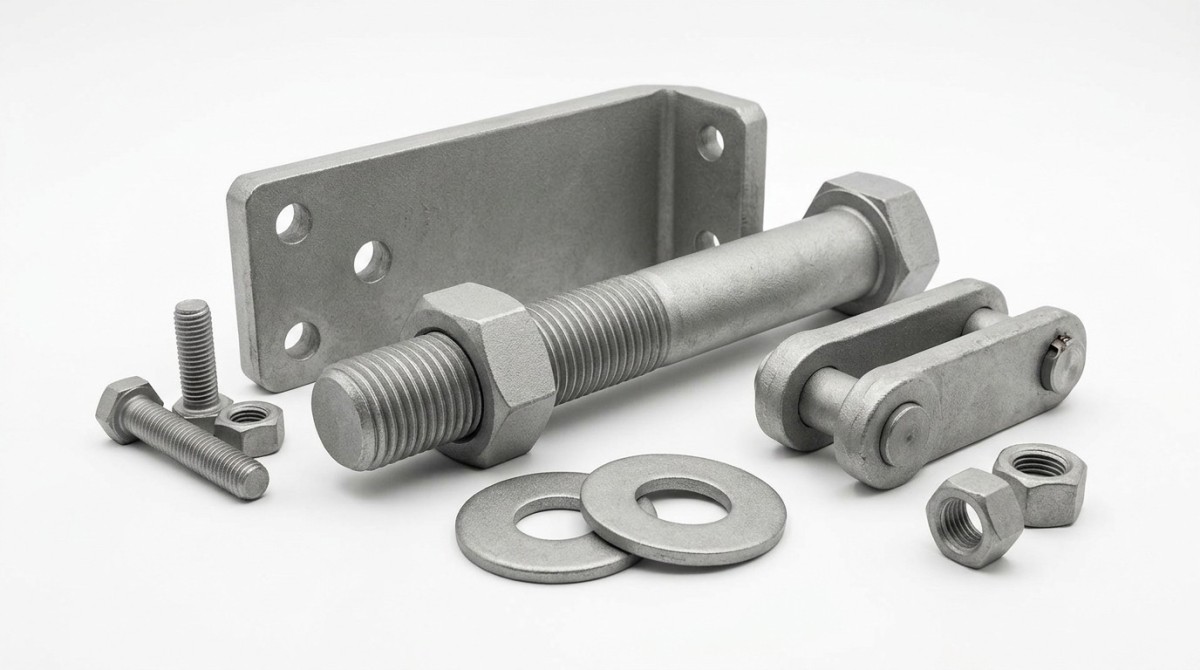
A critical hidden factor in structural failure is Stress Corrosion Cracking (SCC). In coastal mega-structures, Grade 12.9 specialized bolts and other high-strength fasteners are often under immense tensile load. When exposed to the aggressive chloride environments of salt air, these components can experience brittle fracture without significant weight loss or visible thinning. This is a nightmare scenario for quality control personnel, as the failure is sudden and catastrophic.
To mitigate this, technical benchmarking must go beyond basic tensile strength. Decision-makers should prioritize materials that have undergone specific hydrogen embrittlement testing and SCC resistance protocols. Utilizing advanced coatings or alternative high-performance alloys—benchmarked against MIL-SPEC and ASTM standards—is no longer optional for assets intended for a century-long lifecycle. The focus shifts from "will it hold the load?" to "how will the crystalline structure respond to chloride stress over decades?"
The Interfacial Challenge: Why Traditional Sealants and Adhesives Fail
While the focus is often on the steel or concrete, the interface where different materials meet is the most vulnerable point in any coastal structure. High-performance industrial adhesives and sealants are the "unsung heroes" of structural integrity, yet they are frequently the first to succumb to salt air. Hidden factors include the loss of adhesion due to osmotic blistering and the chemical breakdown of polymers when exposed to the alkaline environments often created by concrete in saline conditions.
For engineering project leaders, evaluating the "bond durability" in salt-spray simulation tests is crucial. Specialized reinforcement and repair materials, such as carbon-fiber-reinforced polymers (CFRP), require specific adhesive interfaces that are chemically inert to chloride ions. Without this technical foresight, the "reinforcement" can actually accelerate the degradation of the underlying substrate by trapping moisture at the interface.
Electromagnetic Vulnerability: Corrosive Degradation of Shielding Protocols
In the modern era of "smart" infrastructure, the integrity of electronic assets is as vital as the physical frame. Salt air is particularly aggressive toward electromagnetic shielding. Nano-layered EMI shielding gaskets and conductive coatings can lose their effectiveness if the conductive fillers oxidize. This creates a hidden risk: the structure remains physically sound, but the critical electronic systems—navigation for aerospace or control systems for energy grids—become vulnerable to interference.
G-SCE emphasizes that shielding in coastal zones must be viewed through a dual lens: conductivity and corrosion resistance. Utilizing specialized protection materials that offer "self-healing" properties or are encapsulated within corrosion-resistant gaskets is the benchmark for the next generation of mega-structures. Technical evaluators must ensure that EMI protocols are not compromised by the very environment the structure is built to inhabit.
Strategic Benchmarking: Selecting Materials for a Century-Long Lifecycle
The ultimate goal for procurement directors and Chief Infrastructure Officers is the optimization of the Total Cost of Ownership (TCO). Investing in Grade 12.9 fasteners or lead-rubber seismic bearings that meet Eurocode and ISO standards for corrosive environments might have a higher initial cost, but the reduction in specialized repair cycles and the extension of the asset’s lifecycle provide a massive return on investment (ROI).
To make an informed judgment, decision-makers should follow a three-tier evaluation process:
- Environmental Mapping: Identifying specific chloride concentration levels and wind patterns at the site.
- Material Synergy: Ensuring that fasteners, sealants, and shielding materials are electrochemically compatible to prevent galvanic corrosion.
- Standard Compliance: Validating that all components meet or exceed international technical benchmarks for extreme-shielding and structural fastening.