Search News
Industry Portal
Hot Articles
- How to verify handling strength in fast-cure industrial bondingVerify handling strength in fast cure industrial bonding. Learn how to test early loads, control cure conditions, and validate release times for reliable production.
- SGL Carbon Announces $70 Million Sale of US Moses Lake Carbon Fiber FacilitySGL Carbon announces a $70 million sale of its Moses Lake carbon fiber facility. Explore what buyers should verify about supply planning, CFRP qualification and transaction status.
- How to choose battery pack sealants that withstand thermal cyclingExplore industrial sealing for battery packs: compare sealant chemistries, adhesion, and thermal-cycling tests to choose a reliable seal and reduce leak risks.
Preventing fatigue failure in high-tensile bolts
Time
Click Count
Preventing Fatigue Failure in High-Tensile Bolts: A Technical Guide for Critical Infrastructure
Ensuring Structural Durability in modern mega-structures demands a comprehensive understanding of fatigue failure within Industrial Fasteners. As cyclic loading and environmental stressors compromise Infrastructure Materials, prioritizing Structural Safety is essential for long-term reliability. This technical overview explores how advanced Engineering Materials and meticulous Material Fabrication prevent crack initiation in high-tensile bolts. By adhering to international Shielding Protocols and integrating robust Seismic Protection measures, engineers can mitigate risks effectively. Whether addressing EMI Mitigation or complex Structural Repair, mastering the fatigue limits of high-performance components is vital for decision-makers managing the world’s most critical structural and electronic assets.
Understanding the Mechanics of Fatigue in High-Tensile Fasteners
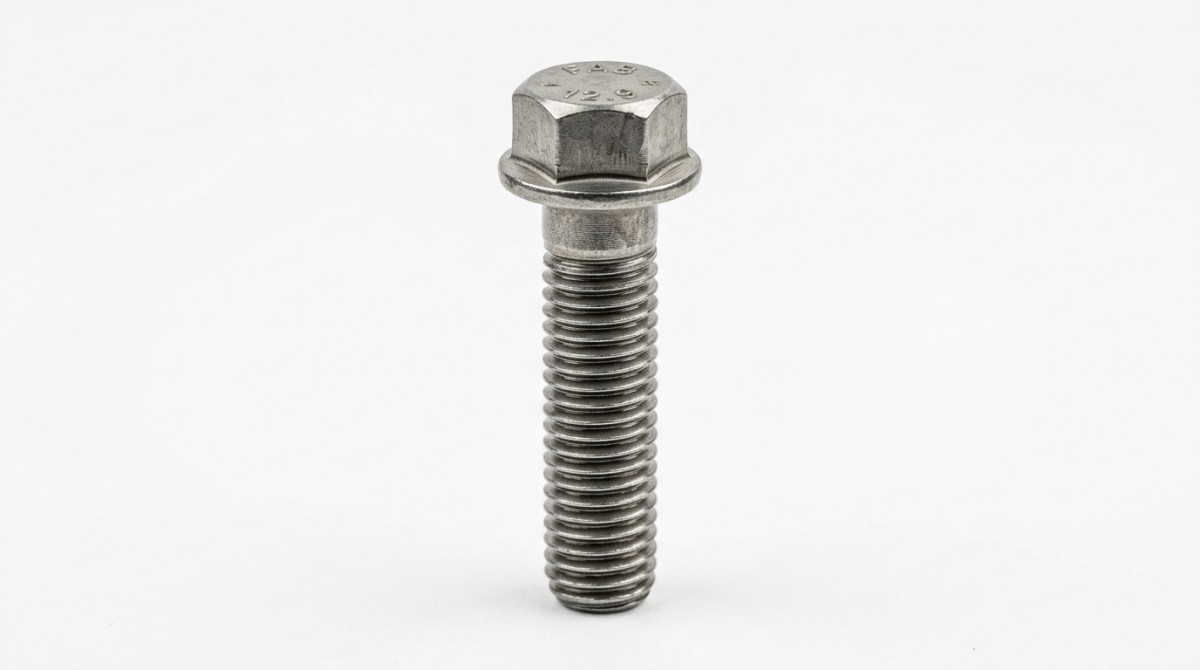
Fatigue failure is the primary cause of failure in high-strength fastening systems, often occurring at stress levels significantly lower than the material's ultimate tensile strength. For Grade 10.9 and 12.9 bolts used in heavy infrastructure, fatigue is a progressive structural damage that occurs when the component is subjected to cyclic loading. The process typically begins with microscopic crack initiation at points of high stress concentration—most notably the thread roots or the head-to-shank transition—leading to crack propagation and, ultimately, sudden catastrophic fracture.
For technical evaluators and safety managers, the challenge lies in the "silent" nature of this phenomenon. Unlike ductile yielding, fatigue provides little to no visible warning. In the context of G-SCE’s benchmarking standards, preventing this failure requires a shift from viewing bolts as simple hardware to treating them as precision-engineered components with specific endurance limits.
Critical Design Strategies to Minimize Stress Concentration
To extend the fatigue life of high-tensile bolts, engineering design must focus on reducing the Magnitude of Alternating Stress. Decision-makers should prioritize the following technical specifications during procurement and design phases:
- Thread Rolling Post-Heat Treatment: Bolts with threads rolled after the heat-treatment process exhibit significantly higher fatigue resistance. This creates beneficial compressive residual stresses at the thread roots, which counteract the tensile stresses that drive crack growth.
- Large Fillet Radii: The transition between the bolt head and the shank is a notorious stress raiser. Utilizing bolts with elliptical or larger-radius fillets distributes the load more evenly, reducing the likelihood of head-to-shank separation.
- Optimized Thread Profile: Adhering to ISO and MJ thread profiles ensures better load distribution across the engaged threads, preventing the first two or three threads from carrying the entirety of the load.
Precision Installation: The Role of Controlled Pre-load
From an operational and project management perspective, the installation phase is where fatigue resistance is either won or lost. The single most effective way to prevent fatigue failure in a bolted joint is to ensure a high and consistent Pre-load (Clamping Force).
When a bolt is tightened correctly, the pre-load should exceed the maximum external load applied to the joint. This ensures that the cyclic fluctuations in the external load are primarily absorbed by the clamped members rather than the bolt itself. If the pre-load is insufficient, the bolt "sees" the full force of every cycle, leading to rapid fatigue. For Grade 12.9 fasteners, G-SCE recommends advanced tensioning methods—such as hydraulic tensioning or the "turn-of-nut" method—over standard torque wrenches to achieve the required accuracy and mitigate the risks of friction-induced torque variance.
Material Selection and Environmental Mitigation
High-tensile bolts are particularly susceptible to environmental factors that accelerate fatigue, such as hydrogen embrittlement and stress corrosion cracking (SCC). For Chief Infrastructure Officers managing assets in volatile or offshore environments, material fabrication standards are paramount.
The use of specialized coatings must be balanced against the risk of hydrogen infusion during the plating process. Furthermore, in seismic-prone regions, integrating Flexible Expansion units and seismic isolation protocols ensures that the fasteners are not subjected to unexpected shear forces that exceed their fatigue-rated design. Benchmarking against MIL-SPEC and Eurocode standards provides the necessary regulatory framework to ensure that high-performance alloys maintain their integrity over a century-long lifecycle.
The Value of Lifecycle Monitoring and Quality Control
For procurement directors and project managers, the long-term ROI of high-tensile fastening systems is protected through rigorous quality assurance. Fatigue failure prevention is not a one-time event but a continuous management strategy:
- Ultrasonic Testing (UT): Implementing non-destructive testing (NDT) protocols to detect internal cracks in critical joints before they reach a critical size.
- Vibration Analysis: Monitoring mega-structures for frequency shifts that indicate a loss of fastener pre-load or joint relaxation.
- Standardized Replacement Cycles: Establishing "fatigue life" limits based on the number of load cycles rather than waiting for visible wear.
Conclusion: Integrating Integrity into Infrastructure
Preventing fatigue failure in high-tensile bolts is a multi-dimensional challenge that bridges material science, precision engineering, and rigorous maintenance. By focusing on post-heat-treatment thread rolling, achieving precise pre-load during installation, and adhering to international technical benchmarks like those curated by G-SCE, organizations can ensure the "Integrity of Infrastructure." For decision-makers, the investment in high-performance fasteners and sophisticated monitoring protocols is not merely a technical necessity—it is a critical risk-mitigation strategy that safeguards both capital assets and human safety in an increasingly complex global environment.
Recommended News
Quarterly Executive Summaries Delivered Directly.
Join 50,000+ industry leaders who receive our proprietary market analysis and policy outlooks before they hit the public library.